

All Resources
Browse our full library of articles, whitepapers, and case studies.
69 resources

Data Integrity in Pharma: ALCOA+, Regulators, and the 483 Failures
Data integrity in pharma: the nine ALCOA+ principles with examples, FDA/MHRA/WHO expectations, the recurring 483 failures, and revised Schedule M.

21 CFR Part 11: What It Is and What It Requires
What 21 CFR Part 11 requires in plain English: electronic records and signatures, predicate rules, audit trails, validation, and Annex 11 mapping.
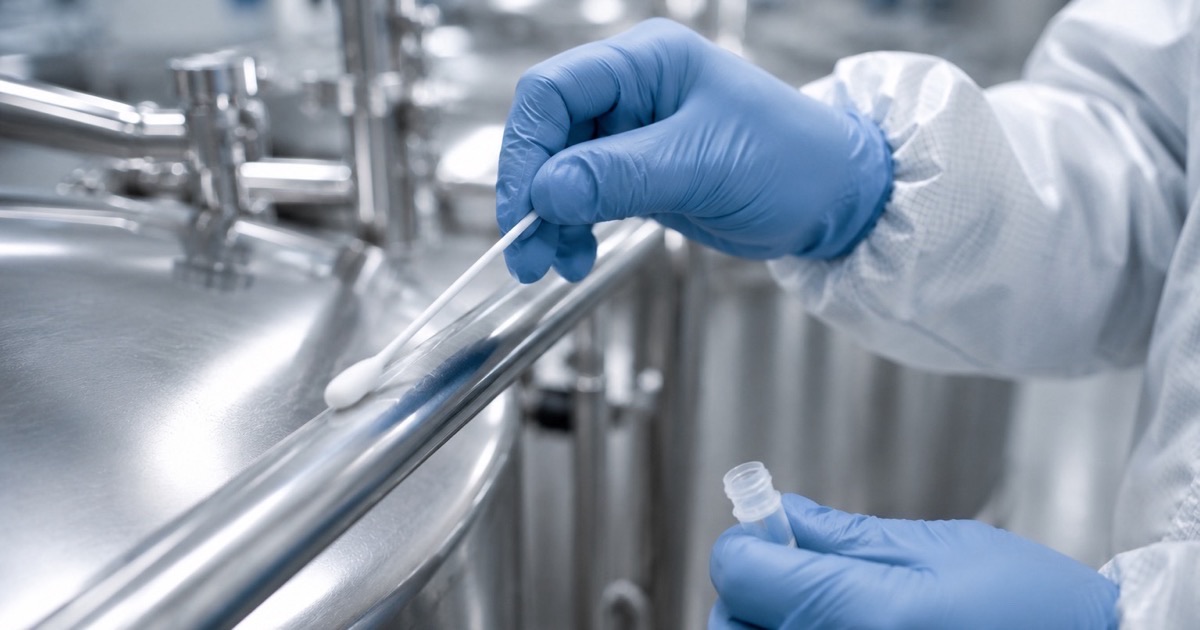
Swab Sampling Procedure for Cleaning Validation: Methods, Recovery and Limits
How to run swab and rinse sampling for cleaning validation — worst-case locations, the swab technique, recovery studies, the swab limit, and visual checks.

MACO Calculation: Methodology and Formulas for Cleaning Validation
How to calculate MACO three ways — health-based (PDE/ADE), dose-based, and 10 ppm — with formulas, a worked example, and an interactive calculator.

Cleaning Validation Guidelines: A Regulator-by-Regulator Guide
Cleaning validation guidelines mapped regulator by regulator — what FDA, EU GMP Annex 15, EMA, PIC/S, ICH, WHO and APIC require, and where they differ.

Cleaning Validation Protocol: A Step-by-Step Guide
How to design, execute and defend a cleaning validation protocol — worst-case selection, HBEL/MACO limits, sampling, hold times and audit-ready records.

What Does It Mean to Review an AI-Generated Document?
FDA's first AI warning letter went to a company with no quality unit. Your company has one. Your QA team is signing AI outputs they cannot explain. That is the same structural failure — with better credentials attached.

Do Five AI Systems Add Up to One Quality System?
Pharmaceutical manufacturers are deploying AI point by point — LIMS, MES, DMS, deviation, CAPA — each system confident within its domain, none connected across them. Cross-system quality events are the highest-risk events in manufacturing. They are also the events that each point AI is structurally least equipped to handle.

Should We Be Validating AI, or Managing It?
GAMP 5 was designed for deterministic software. AI is probabilistic — it fails on inputs outside its training distribution, which are by definition the cases your test library couldn't cover. The right governance model for AI isn't a qualification document. It's the framework you already use for new hires.
FDA's First AI Warning Letter Is Not About AI
FDA issued its first AI-specific warning letter to a manufacturer that used AI to generate SOPs and production records without qualified human review. The industry's response will be 'add a sign-off.' That response misses what the letter actually established.

The Document Was Approved. Nobody Told the Floor.
The gap between a document reaching effectivity and operators being formally qualified to it is a direct product of DMS architecture — not operator negligence. The DMS handed off. The LMS was waiting. No system was watching the window in between.

The Periodic Review That Isn't: Why Calendar-Based SOP Cycles Create Compliance Records Without Creating Compliant Documents
Most pharmaceutical DMS platforms schedule SOP reviews by elapsed time, not by risk. The result is a completion record confirming the review happened — and no mechanism to confirm the procedure is still current.

The Harmonisation Myth: Why Multi-Site DMS Deployments Mean One Contract and Fourteen Isolated Quality Systems
Your DMS contract covers every facility you operate. Your DMS architecture does not — and FDA's cross-facility enforcement does not observe that distinction.

The Checklist Illusion: Why Most 'AI' in Pharma Deviation Investigation Is Just Automation With Better Marketing
Most 'AI' deviation management systems are rule-based automation with better branding. Here's the architectural test that separates genuine contextual reasoning from a relabelled checklist.

The 90-Day SOP Trap: How Document Approval Cycles Became Your Biggest Compliance Liability
FDA's top 483 citation is 'procedures not followed' — but often the procedure existed. It was stuck in approval. Here's why legacy DMS vendors profit from that delay.

Change Control Blindness: Your DMS Can't Tell You Which Documents Need Updating After This Week's FDA Guidance
When FDA publishes new guidance, legacy DMS platforms have no way to automatically identify affected SOPs. Here's the architectural gap — and why it keeps generating 483 observations.

The Pre-Inspection Scramble: Why Pharma Companies Spend Weeks on Document Packages AI Could Generate in Hours
FDA inspection preparation consumes weeks of quality team capacity not because it's complex — but because legacy DMS cannot answer cross-system regulatory questions.

The Human Bottleneck Paradox: How LMS Systems Waste QA Time on AI Work
QA directors spend 80% of their time on administrative training tasks while rushing through critical regulatory approvals—and traditional LMS vendors profit from this inversion.

Why FDA's AI Gives Them an Unfair Advantage Over Your Document Management Strategy
FDA deploys ELSA AI to analyze submissions while pharma uses keyword search for SOPs. The regulatory intelligence gap is widening—and it's becoming a compliance liability.

Beyond Point Solutions: Building Reusable Integration Architecture for Manufacturing Digital Transformation
Most manufacturing companies burn millions on custom integrations that break, don't scale, and create vendor lock-in. Here's the platform approach that's changing enterprise architecture — starting with a chemical manufacturer's SAGE ERP and Dataparc historian integration.

The Validation Debt Crisis: Why Your Multi-Site Strategy Is Creating Competitive Disadvantage
Organizations clinging to single-site validation methodologies across multiple facilities are accumulating massive validation debt that will cripple their ability to scale and adapt. Here's the structured framework that separates industry leaders from laggards.
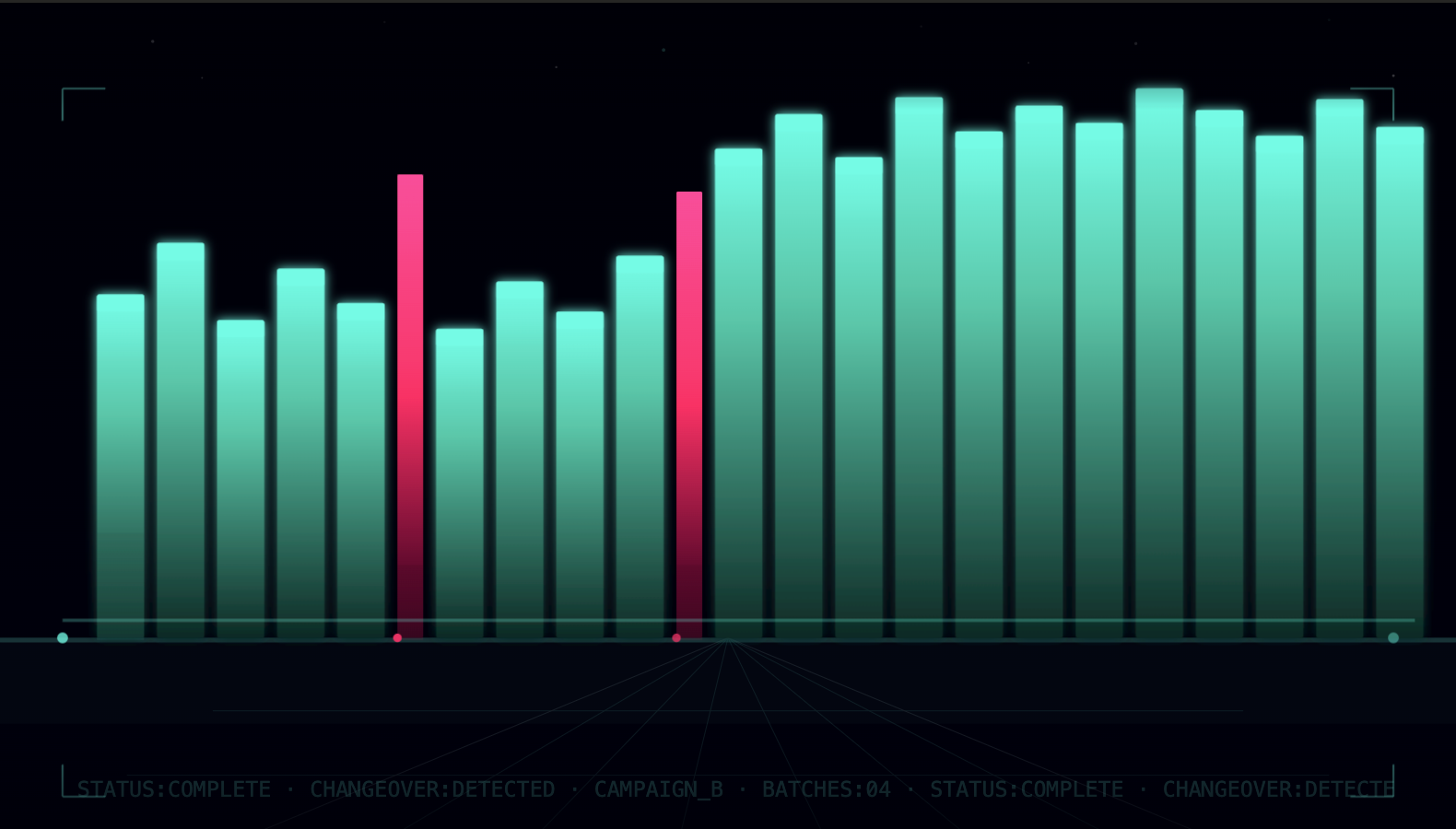
Campaign Length Studies: The Cleaning Validation Liability Every Quality Leader Is Ignoring
While quality teams focus on routine cleaning validation, systematic gaps in campaign length methodology are creating competitive disadvantage and bleeding millions in unnecessary costs across pharmaceutical manufacturing.

The Hidden P&L of Quality: Why Your Cost-of-Quality Number Is Wrong
Most pharma companies report cost of quality at 15-20% of revenue. The real number is 25-40% once you count investigation labor, batch hold costs, and regulatory remediation.

The Multi-Site Quality Trap: Same Company, Different Standards, One FDA Inspector
A company with 30 sites doesn't have one quality system — it has 30 quality systems wearing the same logo. When FDA inspects Site B, they compare it to what they saw at Site A. Here's why every harmonisation initiative fails, and what the missing layer actually is.

Why Your Best Quality Leaders Spend 70% of Their Time on Documentation, Not Quality
The people who understand your process best are drowning in paperwork — writing investigation reports, reviewing batch records, compiling APRs. This is the talent crisis no one talks about.

The Quality Ontology: Why Pharma AI Needs a Knowledge Graph, Not a Data Warehouse
A technical deep-dive into the quality ontology — the connected knowledge model that enables AI agents to reason across MES, LIMS, QMS, and ERP simultaneously. How the Ontology Builder Agent constructs it, how the signal layer keeps it alive, and why this architecture is the prerequisite for every agentic use case in pharmaceutical manufacturing.

Why Your Deviation Investigation Takes 45 Days (and How Agentic AI Cuts It to 5)
Deviation investigations stall at root cause analysis because data lives in silos. How AI agents correlate batch, environmental, and equipment data to compress 45-day cycles to 5.

Your QMS Is a Melting Ice Cube
Traditional quality management systems like Veeva, TrackWise, and MasterControl are structurally obsolete. Here's why agentic AI will replace them within two years — and what pharma leaders should do now.

The Last Generation of Per-Seat Pharma Software
Per-seat licensing made sense when humans did the work. When AI agents do the work, the pricing model — and the vendors built on it — collapse. Here's the math.

Your Next QA Hire Should Be an AI Agent
A practical guide for pharma quality leaders on deploying AI agents in quality operations — the economics, the regulatory framework, and a 90-day pilot that proves the case.
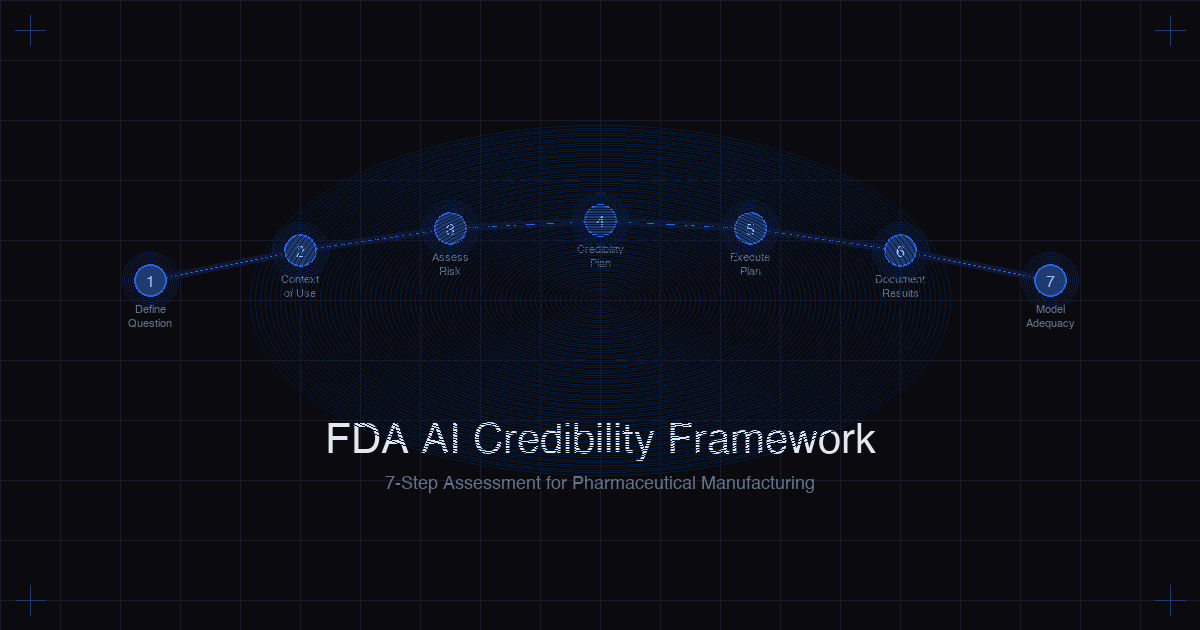
FDA's AI Credibility Framework: What It Means for Pharma Manufacturing
How FDA's 7-step AI credibility assessment framework applies to pharmaceutical manufacturing — and why architecture determines whether your AI systems pass regulatory scrutiny.
Three Facilities, Three FDA Actions, Five Architectural Gaps: How AI Agents Address Cipla's Regulatory Exposure
Between 2023 and 2026, three Cipla facilities — Pithampur, Raigad, and Pharmathen Greece — received FDA enforcement actions documenting the same five systemic failures: complaint investigation, CAPA effectiveness, electronic data review, contamination control, and QC oversight. LeucineOS AI agents map directly to each gap.

Predictive Product Quality: Why Agentic Architecture Outperforms ML Models and Dashboards
Product quality prediction requires a network of specialised AI agents — not a single ML model. How agents, skills, sub-agents, and standardised tool interfaces deliver continuous risk intelligence that annual CPV reviews structurally cannot.

Intelligence Units: A Framework for Measuring Agentic AI
Tokens measure cost. Intelligence Units measure capability. A framework for decomposing what AI agents actually do — reasoning, tool calls, data retrieval, and model selection.

Why Now? AI in Pharmaceutical Manufacturing
Five converging forces — regulatory, technological, economic, workforce, and competitive — are creating an irreversible tipping point for AI adoption in pharma manufacturing.

Agent Skills vs. Prompts: The Architecture That Makes AI Work
Skills — not prompts — are what separate AI demos from production agents. How skills, sub-agents, and delegation enable goal-directed AI in pharma manufacturing.

Electronic Batch Records (eBR): What They Are and How They Work
An electronic batch record (eBR) replaces the paper batch record with a guided, signed, audit-trailed digital record built as the batch runs.

Agentic AI vs. AI Copilots in Pharma: Why Architecture Determines Impact
Most pharma AI deployments are copilots — reactive, single-step, human-prompted. Agentic AI is architecturally different: goal-directed, multi-step, and autonomous within guardrails. A technical framework for CIOs.
Agentic Yield Intelligence: How Goal-Based AI Agents Eliminate Manufacturing Losses
Why dashboards and copilots can't solve pharma yield — and how goal-based AI agents with specialized skills autonomously prevent batch losses before they occur.

Predictive Deviation Intelligence: How AI Agents Eliminate Repeat Quality Failures
70% of pharma deviations share root causes with previous batches — but current QMS platforms investigate each one independently. How goal-based AI agents build a deviation knowledge graph that predicts failures before they recur.

The Agent Architecture Stack: Knowledge Bases, Tools, and Real-Time Data Access for Pharma AI
Most pharma AI is a document chatbot. Real agents need knowledge bases for regulatory context AND tool access to operational systems. The architecture that bridges both is what separates a demo from a deployment.

Agentic Batch Review: How AI Agents Reduce Release Cycles from 20 Days to 1
A batch record reviewer spends 70-80% of their time on mechanical data verification. AI agents can pre-screen 200+ data points, auto-categorise 85% of exceptions as non-critical, and surface only what needs human judgment — cutting release from weeks to hours.

EU Annex 22 and the Architecture Gap: Why Most Pharma AI Deployments Will Fail Compliance
The EU's first-ever AI regulation for GMP environments demands explainability, lifecycle control, and data separation that most pharma AI deployments cannot deliver. A strategic analysis for CIOs.

35% OOS Invalidations, Zero Scientific Justification: Lessons from Aurobindo Pharma's FDA 483
A February 2026 FDA 483 at Aurobindo Pharma's Unit-III found 35% of OOS invalidations in the QC Chemistry lab — with 57% blamed on analyst error and 18% on equipment, none supported by adequate scientific justification. Batches shipped to the US after unresolved Grade A maintenance interventions.

How AI Is Transforming Pharmaceutical Quality Management
Explore how artificial intelligence is reshaping quality management systems in pharma manufacturing, from deviation detection to predictive analytics.
Equipment Swapped, Cleaning Not Revalidated, OOS Dissolved Away: Lessons from Dr. Reddy's FDA 483
A December 2025 FDA 483 at Dr. Reddy's FTO-SEZ facility in Srikakulam found cleaning validation not performed after equipment replacement, OOS dissolution results invalidated despite contradictory evidence, and process qualification gaps — all traceable to a single uncontrolled equipment change eighteen months earlier.
Flaking Caulk, Unmonitored Drains, 'Clean' Equipment with Residue: Lessons from Shilpa Medicare's FDA 483
A November 2025 FDA 483 at Shilpa Medicare found aseptic equipment with non-cleanable surfaces, drains never monitored for microbial growth, caulk-like material flaking inside filling machines, and equipment tagged as 'clean' with residue above acceptance limits.
Seven Contaminated Vials, Five Species, Zero Specific Root Causes: Lessons from Pharmathen's FDA 483
A November 2025 FDA 483 at Pharmathen International found seven contaminated media fill vials carrying Staphylococcus, Micrococcus, Kocuria, Acinetobacter, and Bacillus — all human-source microorganisms. The root cause was attributed to 'poor aseptic behavior' without identifying any specific instances.
337 Nonconformances, Reduced Retention, Zero CAPAs: Lessons from Empower Pharma's FDA 483
A November 2025 FDA 483 at Empower Pharma found 337 of 963 nonconformance reports unresolved — and the firm's response to 'poor practices' by quality personnel was to reduce record retention timelines rather than initiate corrective action.
15 Complaints, 12 Uninvestigated, One Expired Quality Agreement: Lessons from Ubi Pharma's FDA 483
An October 2025 FDA 483 at Ubi Pharma found 15 market complaints for underfill and empty vials — only 3 investigated, none with complaint samples collected, and all under an expired Quality Agreement with the US customer that had lapsed without renewal.

When Batch Records Don't Match Reality: Lessons from Hetero Labs' FDA 483
A September 2025 FDA 483 at Hetero Labs exposed batch production records that didn't match actual API yields — with unexplained drums found in an undisclosed warehouse.
When LIMS and SCADA Controls Fail: Lessons from Immacule Lifesciences' FDA 483
A September 2025 FDA 483 at Immacule Lifesciences exposed systemic failures in computerized system controls — guest accounts with analyst privileges, shared SCADA admin access, and QA unable to review audit trails.
When Cleaning Validation Misses the Worst Case: Lessons from Fareva Amboise's FDA 483
A September 2025 FDA 483 at Fareva Amboise found API residue on 'clean' equipment — 20 months after the product was last manufactured. Cleaning validation studies hadn't sampled the areas where contamination actually accumulated.
How MES Prevents FDA 483 Observations: Lessons from Dr. Reddy's Documentation Failure
A September 2025 FDA 483 observation at Dr. Reddy's exposed critical documentation gaps. Here's what went wrong and how modern MES architecture eliminates the root cause.

Environmental Monitoring Gaps in Aseptic Manufacturing: Lessons from Aurobindo Pharma's FDA 483
A September 2025 FDA 483 at Aurobindo Pharma exposed critical environmental monitoring deficiencies — unmonitored Grade A zones, inadequately validated swab methods from 2016, and missed finger dab sampling during interventions.
Crumbling Tablets, Closed Investigations: Lessons from Cohance Lifesciences' FDA 483
An August 2025 FDA 483 at Cohance Lifesciences found complaint investigations closed without follow-up, without collecting complaint samples, and without assessing impact on distributed batches — while Field Alert Reports went unfiled.
One SOP for Every System: Lessons from Lupin's FDA 483
A July 2025 FDA 483 at Lupin found a single generic SOP governing audit trail reviews across all computerized systems — with QA locked out of direct equipment access and reviewing only printed copies provided by operations.
Legacy Instruments, Zero Data Backup: Lessons from Catalent's FDA 483
A July 2025 FDA 483 at Catalent Indiana found QC instruments with disabled login features, no audit trails, no electronic data backup, and a data integrity assessment that missed critical gaps.
159 Complaints Split to Dodge the Trend, Shared Logins on Critical Systems, No Contractor Audits: Lessons from Alvotech's FDA 483
A July 2025 FDA 483 at Alvotech's biosimilar manufacturing facility in Reykjavik documented 159 product complaints split across categories to avoid triggering control limits, drug substance processed before QC release, unaudited service contractors, and shared logins on GMP-critical systems.
Altered Results, Shredded Investigations: Lessons from Natco Pharma's FDA 483
A June 2025 FDA 483 at Natco Pharma found environmental monitoring data altered from non-conforming to conforming between electronic capture and printed batch records — with operators using USB drives to transfer data.

Discarded Source Data in Media Fills: Lessons from Sun Pharma's FDA 483
A June 2025 FDA 483 at Sun Pharmaceutical found that original inspection labels were discarded after transcription into batch records — with no second-person verification and no way to confirm accuracy of the transferred data.
When Stability Trends Are Ignored Until They Fail: Lessons from Alembic's FDA 483
A May 2025 FDA 483 at Alembic Pharmaceuticals found an API impurity approximately doubling over 6 months with no investigation — because the OOT procedure only triggered on point-to-point differences.

Eight Systems, Zero Audit Trails: Lessons from Apotex's FDA 483
A May 2025 FDA 483 at Apotex documented eight distinct computerized system failures — from filling machines with no audit trails to 404 undocumented password escalations and a failed test printout found in a storage room.

Eight OOS Results, Zero Root Causes: Lessons from Glenmark's FDA 483
A February 2025 FDA 483 at Glenmark Pharmaceuticals found 8 OOS investigations for dissolution testing since April 2024 — with no specific root causes identified and batches released without re-validation.

Falsified Temperature Records, Backdated Documents, Bare Footprints in Cleaned Equipment: Lessons from Tyche Industries' FDA 483
An August 2024 FDA inspection at Tyche Industries in Kakinada found operators fabricating temperature data for equipment that was not operational, managers backdating documents during the inspection, rust residues inside cleaned equipment, and bare footprints inside production vessels — leading to Warning Letter 693081 and Import Alert 66-40.
Torn HEPA Filters, Passing Integrity Tests: Lessons from Granules India's FDA 483
A September 2024 FDA 483 at Granules India found HEPA filters severely damaged and torn — yet the facility's own integrity testing had not identified the damage. Dust collection systems showed visible build-up, and equipment tagged as 'clean' had visible residue.
Dead Instrument, No Data Backup, No Impact Assessment: Lessons from Alkem's FDA 483
A March 2024 FDA 483 at Alkem Laboratories found a QC instrument that failed during preventive maintenance — with no investigation into the impact on prior test data, no backup of electronic records, and complaint investigations closed without analytical testing.
No Audit Trails, Shared Logins, Local Storage: Lessons from Hengrui's FDA 483
A January 2024 FDA 483 at Jiangsu Hengrui Pharmaceuticals found portable NVP monitoring equipment with no audit trails, shared login credentials across shifts, HPLC data stored on unprotected local workstations, and a data integrity assessment that missed critical systems.
337 Deviations, Zero Root Causes: Lessons from Bristol Myers Squibb's FDA 483
A May 2023 FDA 483 at Bristol Myers Squibb found 337 manufacturing deviations classified as 'no impact' in just six months — with no root cause investigations, no corrective actions, and no analysis of shared causes across equipment excursions, leaks, and procedural failures.