Cleaning Validation Guidelines: A Regulator-by-Regulator Guide
The major regulators converge on health-based limits, risk-based worst-case selection, and lifecycle validation — but differ in emphasis, vintage, and legal force. Here is what each one actually requires.
There is no single global cleaning validation standard. A VP of Quality running sites that ship to the US, EU, and domestic markets is answering to several frameworks at once, and the temptation is to treat them as interchangeable. They are not — but they are converging. Read across the major bodies and the same three ideas keep surfacing: residue limits should rest on a health-based, toxicological foundation rather than arbitrary defaults; the programme should be driven by quality risk management and a documented worst-case rationale; and validation is a lifecycle to be maintained, not a one-time qualification to be filed. The differences that remain are largely differences of emphasis, vintage, and legal force.
The sharpest practical split is on the basis for residue limits. EU GMP Annex 15 (2015), the EMA HBEL guideline, ICH (via Q3D/Q9), WHO’s HBEL supplement, APIC, ISPE Risk-MaPP, MHRA, and Health Canada have all moved to a substance-specific health-based exposure limit — the Permitted Daily Exposure (PDE) — as the scientific anchor. Older texts and the legacy carryover triad (0.1% of therapeutic dose, 10 ppm, visually clean) still appear in PIC/S PI 006-3 (2007) and WHO TRS 1019, and the US FDA’s foundational 1993 inspection guide predates the HBEL model entirely and deliberately sets no numeric limit at all. Knowing which document governs which site, and which vintage of thinking it reflects, is what keeps an inspection answer defensible.
There is no single global cleaning validation standard — but the major bodies are converging on the same three ideas: health-based residue limits, risk-based worst-case selection, and validation as a maintained lifecycle.
How to read the differences
Three ideas recur across every framework.
This page maps the frameworks side by side so a quality leader can see exactly where they agree, where they diverge, and what each one actually requires in writing. Every statement below is drawn from the official guidance text. Where a regulator declines to set a numeric limit, that is stated plainly rather than filled in with a borrowed number — because attributing the wrong limit to the wrong regulator is itself an inspection liability.
Health-based residue limits
Carryover limits should rest on substance-specific toxicology — a Health Based Exposure Limit expressed as a Permitted Daily Exposure (PDE) — rather than arbitrary defaults. This is the explicit basis in EU GMP Annex 15, the EMA HBEL guideline, MHRA, Health Canada, APIC, and ISPE Risk-MaPP, with ICH supplying the derivation logic.
Risk-based worst-case rationale
The programme should be driven by quality risk management and a documented worst-case rationale — selecting the hardest-to-clean, most hazardous product to represent a group, justified by solubility, cleanability, toxicity, and potency rather than convenience. ICH Q9(R1) makes QRM the mandate; Annex 15, APIC, and Health Canada require the rationale in writing.
Validation as a maintained lifecycle
Validation is a lifecycle to be maintained, not a one-time qualification to be filed. Annex 15, Health Canada GUI-0028, PDA TR 29, and ISPE Risk-MaPP all frame design, qualification, and ongoing monitoring as continuous, with change control, re-validation triggers, and continued testing at changeover.
The sharpest divergence is on the basis for residue limits, and it splits the field three ways. The newer frameworks anchor limits in toxicology — the HBEL or PDE — and treat the older numbers as alert limits at most. The pre-HBEL texts still frame acceptance on the legacy carryover triad: the most stringent of 0.1% of the normal therapeutic dose, 10 ppm of one product in the next, and no visible residue after cleaning. And the US FDA sits apart from both: its 1993 guide states that FDA does not intend to set acceptance specifications, citing the wide variation in equipment and products across the industry, so the residue limit is the firm’s own scientifically justified rationale rather than an FDA-mandated number. Knowing which of these three positions a given document occupies is what keeps an answer to an investigator defensible.
United States: FDA and 21 CFR 211.67
A binding regulation and a 1993 interpretive guide that sets no number.
The US framework has two layers: a binding regulation in 21 CFR 211.67, and a 1993 interpretive guide that explains how investigators judge a programme. Neither sets a numeric residue limit.
The binding requirement sits in 21 CFR 211.67: equipment and utensils must be cleaned, maintained, and as appropriate sanitised or sterilised at appropriate intervals to prevent contamination that would alter the safety, identity, strength, quality, or purity of the drug product (211.67(a)); there must be written cleaning and maintenance procedures covering responsibility, schedules, detailed methods, disassembly and reassembly, removal of previous batch identification, protection of clean equipment, and inspection for cleanliness immediately before use (211.67(b)); and records must be kept per 211.180 and 211.182 (211.67(c)). The interpretive layer is the 1993 FDA Guide to Inspections: Validation of Cleaning Processes (7/93).
Notably, the guide states that FDA does not intend to set acceptance specifications or methods for determining whether a cleaning process is validated, citing the wide variation in equipment and products across the bulk and finished-dosage industries. Instead it expects a firm’s rationale for residue limits to be logical based on the manufacturer’s knowledge of the materials involved, and to be practical, achievable, and verifiable, with the sensitivity of analytical methods defined to set reasonable limits. The limit approaches the guide mentions — a 10 ppm analytical detection level, a biological-activity level such as 1/1000 of the normal therapeutic dose, and an organoleptic no-visible-residue level — are presented as examples discussed by industry representatives in the literature or in presentations, not as FDA-set acceptance criteria.
The guide expects written validation protocols prepared in advance for each system or piece of equipment, studies conducted to those protocols, and a final report approved by management stating whether the cleaning process is valid. It accepts both direct surface sampling (swabs, valued for hardest-to-clean and reasonably accessible areas) and rinse-solution sampling, while cautioning that sampling material such as swab adhesive can interfere with analysis. It also notes that where cleaning is only between batches of the same product, the firm need only meet a visibly clean criterion, and such between-batch cleaning does not require validation; it questions the batch-to-batch variability of manual cleaning. Because this guide dates to 1993, it predates the modern HBEL/PDE approach now embedded in EMA, PIC/S, and ICH thinking.
European Union: EU GMP Annex 15 and the EMA HBEL guideline
Lifecycle and risk management on top, toxicology-derived limits underneath.
Europe runs on two coupled documents: EU GMP Annex 15 sets the operational expectations a quality leader is judged against, and the EMA HBEL guideline supplies the toxicological engine that derives the limits Annex 15 points to.
EU GMP Annex 15, in its 2015 revision (dated 30 March 2015, operational from 1 October 2015), frames qualification and validation around lifecycle and quality risk management and states that ICH Q8, Q9, Q10, and Q11 should be taken into account. On residue limits it is unambiguous: §10.6 requires that limits for the carryover of product residues be based on a toxicological evaluation, with the justification documented in a risk assessment that includes all supporting references, and directs the reader to the EMA HBEL guideline; limits must also be established for the removal of any cleaning agents used, and acceptance criteria must consider the potential cumulative effect of multiple items of equipment in the process equipment train. The 2015 revision deliberately moved to this HBEL/PDE basis and does not prescribe any fixed empirical carryover limit such as the older 10 ppm or 0.001-of-dose criteria. See EudraLex Vol. 4, Annex 15 (2015).
Annex 15 also sets the operational expectations a quality leader is judged against. §10.5 requires an assessment of the variable factors that influence cleaning effectiveness (operators, rinsing times, level of procedural detail), with worst-case situations used as the basis for studies. §10.10 requires a documented scientific rationale for worst-case product selection — solubility, cleanability, toxicity, and potency are cited criteria — and §10.1 expects a justification of the specific equipment selected where similar types are grouped. On the number of runs, §10.13 requires the cleaning procedure to be performed an appropriate number of times based on a risk assessment; Annex 15 does not prescribe a fixed number of consecutive runs. §10.2 states that a visual check is an important part of the acceptance criteria but is not generally acceptable as the sole criterion, and that repeated cleaning and retesting until acceptable results are obtained is not an acceptable approach. Sampling (§10.12) may be by swabbing and/or rinsing or other means, with materials and method not influencing the result and recovery shown from all product-contact materials; §10.11 requires protocols to specify or reference sampling locations, the rationale for them, and the acceptance criteria; and §9.1 requires analytical methods to be validated with appropriate detection and quantification limits. The annex also addresses microbial and endotoxin risk (§10.7), dirty- and clean-hold times (§10.8), campaign manufacture (§10.9, the maximum campaign length being the basis for studies), and confirmation of manual cleaning effectiveness at a justified frequency (§10.15). For therapeutic macromolecules and peptides, §10.6.1 notes that degradation and denaturation under pH extremes and/or heat may render a toxicological evaluation inapplicable, and §10.6.2 allows representative parameters such as total organic carbon and conductivity where specific residue testing is not feasible.
EMA supplies the toxicological engine the rest of Europe runs on. Its Guideline on setting health based exposure limits (HBEL) for shared facilities (EMA/CHMP/CVMP/SWP/169430/2012), first published 24 November 2014 and applicable to both human and veterinary medicines, establishes a substance-specific Health Based Exposure Limit expressed as a Permitted Daily Exposure (PDE) — a dose unlikely to cause an adverse effect with daily lifetime exposure. The PDE is derived using the equation from Appendix 3 of ICH Q3C and VICH GL 18: PDE = NOAEL × Weight Adjustment / (F1 × F2 × F3 × F4 × F5), where F1 to F5 are adjustment factors for various uncertainties. Determination follows four steps — hazard identification across all relevant data, identification of critical effects, determination of the NOAEL for those effects, and application of the adjustment factors — using the NOAEL at the lowest dose where a critical effect appears in several studies, and a LOAEL where no NOAEL is available; deviation from the approach is accepted only if scientifically justified. For genotoxic actives with no discernible threshold, a Threshold of Toxicological Concern of 1.5 µg/person/day applies, corresponding to a theoretical 1 × 10⁻⁶ excess cancer risk.
The guideline’s purpose is risk identification when products share facilities: the HBEL feeds a quality risk management decision on whether dedicated facilities or organisational and technical controls are needed, with dedicated facilities still required for substances of high sensitising potential or where the risk cannot be adequately controlled (the guideline cites certain antibiotics, hormones, cytotoxics, and highly active drugs). The companion 2018 Q&A (EMA/CHMP/CVMP/SWP/246844/2018) draws a distinction that matters operationally. HBELs should be established for all medicinal products (Q1), determined by a person with adequate toxicology/pharmacology expertise (Q4). Critically (Q6), the guideline is not intended to set cleaning limits at the level of the calculated HBEL; for existing products, historically used cleaning limits should be retained and may be treated as alert limits, provided that — taking cleaning-process capability into account — they give sufficient assurance that excursions above the HBEL are prevented, with repeated excursions not acceptable. Per Q7, analytical testing is expected at each product changeover on shared equipment following validation, unless justified otherwise through a documented quality risk management process that considers process repeatability (manual being generally less repeatable than automated), the product’s hazard, and whether visual inspection can be relied upon at the residue limit justified by the HBEL.
PIC/S: PI 006-3
Harmonised inspector guidance — detailed on method, still on the legacy triad for limits.
PIC/S PI 006-3 is the harmonised inspectorate guidance — guidance for inspectors, not binding legislation. It is detailed on method and lifecycle, but its residue-limit basis still reflects the pre-HBEL era.
PIC/S PI 006-3 (25 September 2007) positions itself in its Introduction as additional to the GMP Guide, noting that the basic principles of qualification and validation are in Annex 15 to the PIC/S and EU GMP Guide. On residue limits it reflects the pre-HBEL era. §7.11.3 frames acceptance limits using the legacy carryover triad: the most stringent of (a) no more than 0.1% of the normal therapeutic dose of any product appearing in the maximum daily dose of the following product, (b) no more than 10 ppm of any product in another, and (c) no quantity of residue visible after cleaning, with spiking studies establishing the concentration at which actives become visible. §7.11.3(d) adds that for certain allergenic ingredients, penicillins, cephalosporins, potent steroids, and cytotoxics the limit should be below the limit of detection of the best available methods, which in practice may mean dedicated plants. §7.11.1 requires the limit-selection rationale to be logically based on the materials and their therapeutic dose and to be practical, achievable, and verifiable. This document has not been updated to the toxicology/PDE-based model; PI 006-3 dates to 2007 and predates the EMA HBEL framework of 2014–2015 that was later embedded in the revised Annex 15.
On method and lifecycle it is detailed. The objective (§7.1.4) is a reliable procedure so routine analytical monitoring may be reduced or omitted; normally only product-contact surfaces need validation, though non-contact parts into which product may migrate (seals, flanges, mixing shafts, oven fans, heating elements) should be considered (§7.3.1); changeover cleaning for marketed products should be fully validated (§7.3.2); and bracketing of very similar products with a single worst-case study is accepted (§7.3.5). At least three consecutive successful applications should be performed to prove validation (§7.3.6) — a fixed expectation that distinguishes PI 006-3 from the risk-based run counts in Annex 15 and the MHRA guidance. Change control and periodic re-validation are required (§7.3.8), manual methods reassessed more frequently than CIP (§7.3.9), and ‘test until clean’ is not acceptable (§7.3.10). Sampling uses direct (swab) and indirect (rinse) methods, with a combination most desirable (§7.8.2); detergent residues should be evaluated with defined limits, ideally none detected (§7.9.1); and analytical methods should be challenged in combination with the sampling methods to demonstrate recovery (§7.10.3). A practical note for quality leaders tracking the trajectory: a joint EMA–PIC/S concept paper on revising Annex 15 was published on the PIC/S site on 10 February 2026 and is in public consultation from 9 February to 9 April 2026, aiming to extend Annex 15’s scope to active-substance manufacturers; PI 006-3 itself remains the current 2007 text.
ICH: Q7, Q9(R1) and Q3D(R2)
No standalone cleaning guideline — the mandate and the derivation logic, distributed.
ICH does not publish a standalone cleaning validation guideline and prescribes no numeric residue limit or HBEL formula. Its contribution is distributed across three documents: the API expectations and Q&As in Q7, the risk-management mandate in Q9(R1), and the PDE derivation template in Q3D(R2).
For APIs, ICH Q7 sets the cleaning expectations and the ICH Q7 Questions & Answers (current version 10 June 2015, Step 4) contains a Section 5, Process Equipment – Cleaning. Q&A 5.1 confirms that ‘visually clean’ may be acceptable for dedicated equipment based on the ability to visually inspect and sufficient supporting data from cleaning studies (Q7 §12.76). Q&A 5.2 expects acceptance criteria for residues to be defined and equipment cleaned at appropriate intervals to prevent build-up and carry-over, whether or not equipment is dedicated. Q&A 5.3 ties dirty-hold time to Q7 §5.21 — established by the company and confirmed during initial cleaning validation, with written procedures protecting clean equipment (clean-hold time) — and Q&A 5.4 addresses campaign manufacturing via §§5.23 and 8.50. Q&A 5.5 expects both visual examination and analytical testing during validation, with routine post-validation monitoring at changeover including visual inspection and the frequency of ongoing analytical testing set by a risk-based approach. On the basis for limits, Q7 §12.74 states that residue limits should be practical, achievable, verifiable, and based on the most deleterious residue, and can be established based on the minimum known pharmacological, toxicological, or physiological activity of the API or its most deleterious component — pointing to a toxicological basis without prescribing a number.
The modern health-based framing is delivered indirectly. ICH Q9(R1) Quality Risk Management (final version 18 January 2023) states in Annex II.4 that quality risk management is used to determine acceptable, specified cleaning validation limits and to differentiate efforts based on intended use, and Annex II.6 applies it to the scope and extent of validation activities and follow-up such as sampling, monitoring, and re-validation. ICH Q3D(R2) Guideline for Elemental Impurities (final version 26 April 2022) supplies the PDE methodology, defining the PDE as the maximum acceptable intake per day and deriving it (Appendix 1, formula A.1.1) as PDE = NO(A)EL × Mass Adjustment / (F1 × F2 × F3 × F4 × F5). That NOAEL-plus-modifying-factors template is the same toxicological logic the EMA HBEL guideline and PIC/S use to derive health-based carryover limits — so ICH supplies the risk-management mandate and the derivation logic rather than the older 10 ppm / 0.001-dose / visually-clean numeric criteria.
APIC: the API cleaning validation guide
Industry guidance built for API manufacture, fully aligned to HBEL.
APIC’s cleaning validation guide is industry guidance from the Active Pharmaceutical Ingredients Committee, a sector group of CEFIC — not a regulatory requirement — and is the document most directly aimed at API manufacture.
The APIC Guidance on Aspects of Cleaning Validation in API Plants (April 2019 revision, updated February 2021) recommends that acceptance criteria, expressed as Maximum Allowable Carryover (MACO), be calculated using health-based data as an Acceptable Daily Exposure (ADE) or Permitted Daily Exposure (PDE), with HBEL-based MACO = (HBEL of previous compound × minimum next batch size × Purging Factor) / (maximum therapeutic daily dose of the next material × Safety Factor). Where health-based data is unavailable it permits a General Limit approach, MACO = MAXCONC × MBS, with a maximum allowed concentration often set in the 5–500 ppm range; 100 ppm is very frequently used in API manufacture (equivalent to 0.01% of the minimum batch size) and a 10 ppm general limit equals 0.001% of the minimum batch size. The legacy 1/1000th-of-therapeutic-dose criterion is retained specifically for therapeutic macromolecules and peptides, typically combined with a 10 ppm general limit, with the lowest resulting value applied. Equipment must be visually clean in the dry state as a baseline criterion in addition to an analytical limit.
APIC mandates a strict data hierarchy for setting the HBEL — most reliable data first (HBEL, then NO(A)EL/LO(A)EL as point of departure), falling back to LD50, BMD, hazard-class data, QSAR defaults, or the TTC approach only when better data is unavailable. It introduces a risk-based ‘levels of cleaning’ concept (Level 2 high-risk with mandatory analytical verification, Level 1 medium-risk with recommended verification, Level 0 low-risk gross cleaning with no validation required), with visual inspection at all levels and each level justified by a risk assessment. Worst-case selection directs choosing the most active API (lowest ADE/PDE) with the smallest MBS/TDD ratio for a conservative MACO; swab limits derive as target [µg/dm²] = MACO [µg] / total contact surface [dm²] (Equation 4.2.5-I) with recovery studies and method validation required. A programme generally encompasses three consecutive successful cleans, though the guide states companies should determine the adequate number for their operation. The guide is explicitly aligned with the EMA HBEL guideline and its 2018 Q&A and integrates ICH Q9 and ISPE Risk-MaPP. Its distinctive API insight: unlike finished production where surface residues may be 100% carried over, carryover risk in API production is lower because subsequent synthetic and purification steps purge residues, which the guide accounts for through the Purging Factor and a separate rationale for higher qualified limits in chemical versus pharmaceutical production. It also advises equipment never be left with water as the last rinse, with the final step a solvent dry or nitrogen flush to prevent microbial growth.
WHO: TRS 1019 and TRS 1033
Legacy triad in the core guidance, HBEL added in a separate 2021 supplement.
WHO’s core cleaning validation guidance still frames limits on the traditional carryover triad, with the health-based content delivered later in a separate supplement.
WHO’s core cleaning validation guidance is Appendix 3 of Annex 3, ‘Good manufacturing practices: guidelines on validation,’ in WHO Technical Report Series No. 1019 (2019), adopted by the Expert Committee on Specifications for Pharmaceutical Preparations; the appendix text was originally published as TRS 937, Annex 4 (2006). It still frames acceptance limits on the traditional carryover triad. §11.9 lists the three most commonly used criteria — visually clean with no residue visible after cleaning (noting this may not suit high-potency, low-dosage drugs), no more than 10 ppm of one product in another, and no more than 0.1% of the normal therapeutic dose of one product in the maximum daily dose of a subsequent product — and §11.10 requires the most stringent to be used. Limits may be expressed as ppm in the next product, per surface area (µg/cm²), or as ppm in rinse water (§11.6), and allergens such as penicillins and cephalosporins and highly potent materials such as potent or anovulent steroids and cytotoxics should be undetectable by the best available methods, implying dedicated facilities (§11.11).
The method expectations are detailed: at least three consecutive successful applications (§3.3); bracketing, worst-case selection, and periodic revalidation (§3.2); both swab and rinse sampling with a combination most desirable (§9.2); worst-case and hardest-to-clean locations identified in the protocol, particularly for CIP systems (§9.5–9.6); recovery characterised as good above 80%, reasonable above 50%, and questionable below 50% (§9.9); constant retesting discouraged as evidence the process is not validated (§9.3); analytical methods validated before the study with detection limits sensitive to the acceptable residue level (§10.1, §10.4); and suitable methods including HPLC, GC, HPTLC, TOC, pH, conductivity, UV, and ELISA (§10.5). WHO supplemented this with Annex 2 of TRS 1033 (2021), ‘Points to consider when including Health-Based Exposure Limits (HBELs) in cleaning validation,’ which defines HBEL as equivalent to the PDE, introduces Maximum Safe Carryover (MSC) and Maximum Safe Surface Residue (MSSR = MSC / total shared product-contact surface area), and the margin of safety as the ratio between the HBEL-based acceptance limit and the process residue data. It states a HBEL-based cleaning limit should be calculated and compared against the existing limit, with historically established limits used where they are more stringent than HBELs — moving cleaning limits toward toxicology-derived values rather than the older 10 ppm / 0.1%-dose defaults.
MHRA: HBEL and cross-contamination control
One of the most pointed inspectorate statements — HBEL as the foundation, not just a cleaning number.
The MHRA Inspectorate’s Q&As are among the most pointed statements from any inspectorate, and unambiguous about the basis for limits.
The MHRA Inspectorate’s Cross-contamination control and Health Based Exposure Limits (HBEL) Q&As (published 22 October 2018) is unambiguous about the basis for limits. Cleaning methods should clean to the lowest practical standard, justified by the HBEL and within a threshold of visually clean, and manufacturers may retain traditional limits that have been successfully achieved — so the HBEL is used to justify and risk-assess limits rather than to recalculate every working limit. Critically, the MHRA states that continued reliance on traditional calculations such as 1/1000th of a dose was rejected as not adequately scientific, and that the draft ‘highly hazardous’ approach should not be used. Manufacturers without HBELs such as PDEs should develop them without delay, with pragmatism for lower-hazard products and priority for products toward the higher-hazard end of the continuum; a triage approach may help prioritisation.
The MHRA stresses that HBELs are not just for setting cleaning limits but should be an integral foundation of risk-managed cross-contamination control, used to consider where contamination at that level — at both batch and unit-dose level — could enter a subsequent product if controls are inadequate. On runs, three batches are not a fixed requirement; more than three clean-downs may be required to account for variables such as manual cleaning, and before validation the method must be developed, dismantled parts identified from the QRM exercise, and hold time and maximum campaign length accounted for. Analytical sampling and testing must continue at changeover after validation — by explicit analogy to process validation, it would not be acceptable to stop finished-product testing just because a process is validated — the only exception being where visual inspection can be relied upon after successful validation accounting for all variables. A matrix approach grouping products on common equipment with a common cleaning method is acceptable but must account for permitted cleaning limits as well as solubility and cleanability, with validated methods and established recoveries reflecting actual recovery from production equipment. The MHRA also criticises tick-box QRM — FMEA-style assessments that justify current controls without confirming effectiveness by observation of practice, contrary to EU GMP Part I clause 1.13 — and identifies inadequate equipment cleaning as typically the largest cross-contamination risk, noting cleaning validation is often not supported by sound science and is not adequate for products with lower HBEL.
Health Canada: GUI-0028
Aligned with the PIC/S HBEL approach, structured as a three-phase lifecycle.
Health Canada’s guide aligns explicitly with the PIC/S move to toxicological HBELs and lays out a three-phase validation lifecycle.
Health Canada’s Cleaning Validation Guide (GUI-0028), published 29 June 2021, explicitly aligns with the PIC/S approach adopted on 1 July 2018 of using toxicological evaluation to set Health-Based Exposure Limits — such as the Permissible Daily Exposure (PDE), noted as synonymous with ADE, or the Threshold of Toxicological Concern for genotoxic impurities (§4.1) — with a qualified person evaluating all pharmacological and toxicological data, referencing PIC/S PI 046-1 and the PI 053-1 Q&A. §10 defines a maximum safe carry-over limit as the amount of active from the first product that can carry into the second such that the second product’s maximum daily dose contains no more than the HBEL of the first, with surface area and other safety considerations then used to derive preliminary swab or rinse limits; final cleaning limits should not exceed this value, and MACO calculations must use risk-management principles, be based on toxicological evaluation, and be documented as a risk assessment. The older criteria such as 1/1000th of a dose and 10 ppm are framed as historic limits useful for setting alert limits where HBEL-derived limits are significantly higher, with procedures already achieving better limits continuing to do so, and the visually-clean criterion remaining mandatory (§9.1, §10).
GUI-0028 lays out a three-phase lifecycle (§7): Phase 1 design and development with separate control of manual (§7.1.1) and automated (§7.1.2) cleaning, Phase 2 qualification and equipment release (§7.2), and Phase 3 ongoing monitoring with change control, requalification (§7.3.1), and assessment of new products (§7.3.2). A documented contamination control strategy and QRM process proportional to risk are required (§5), with a Cleaning Validation Master Plan and justified worst-case grouping (§6). Analytical methods must be validated per ICH Q2 with recovery studies for all sampling methods, percent recovery established per surface and used in calculations (§8); sampling is by swab/wipe, rinse, or a combination targeting justified hardest-to-clean areas (§9.2). Microbiological controls use QRM including clean-hold time, campaign length, prevention of stagnant water, and endotoxin assessment (§11); biotechnology processes often use non-specific methods such as TOC because cleaning can denature proteins and should include microbiological and endotoxin assessment (§14); and the decision to dedicate facilities or hard-to-clean parts rests on QRM and toxicological evaluation (§12.3). §10 cites the ISPE Risk-MaPP Baseline Guide as further guidance on calculating limits.
Industry guidance: ISPE Risk-MaPP, PDA TR 29 and USP
Voluntary best practice and compendial methods — influential, but not binding law.
Three industry references shape practice without carrying the force of regulation: ISPE Risk-MaPP for deriving health-based limits, PDA TR 29 for the lifecycle, and USP for supporting methods.
ISPE’s Baseline Guide Volume 7, Risk-Based Manufacture of Pharmaceutical Products (Risk-MaPP), Second Edition (July 2017), is voluntary industry best-practice guidance, not binding law, and it is the document most regulators point to for the mechanics of deriving health-based limits. Risk-MaPP applies pharmaceutical quality risk management in accordance with ICH Q9 to evaluate and control cross-contamination risk in multiproduct and shared facilities, and uses health-based exposure limits — expressed as PDE and ADE, treated as equivalent terms consistent with the EMA HBEL guideline — as the scientific basis for cleaning acceptance and carryover limits. The ADE/PDE is set from a point of departure such as a NOAEL/NOEL or lowest clinically relevant effect divided by assessment factors, then used to calculate carryover (MACO) limits on a toxicologically justified, patient-safety-driven model. It moves away from the older non-health-based defaults — 1/1000 of the minimum therapeutic dose and the 10 ppm criterion — because for a subset of potent or toxic compounds those defaults are not adequately protective, with visual cleanliness retained as a supplementary control. It supports risk-proportionate control strategies across a hierarchy from administrative and procedural controls up to full facility dedication; the Second Edition incorporates ICH M7 for DNA-reactive impurities, adopts a lifecycle approach with ongoing cleaning validation, and aligns with the EMA HBEL guideline and the revised EU GMP Chapters 3 and 5.
PDA Technical Report No. 29 (Revised 2012): Points to Consider for Cleaning Validation is an industry consensus technical report — a paid, copyrighted PDA publication, not an enforceable regulation. The 2012 revision integrated a validation lifecycle concept aligned with ICH Q8(R2), Q9, and Q10, structured as cleaning process design and development, qualification, and maintenance of the validated state, deliberately paralleling the FDA 2011 Process Validation guidance. On limits, TR 29 does not mandate a single value; its residue chapter presents multiple acceptable-residue-level (ARL) approaches — based on the dose of the API (the older dose-based method), based on toxicity, and based on ISPE’s Risk-MaPP baseline (a health-based ADE approach) — alongside microbiological and endotoxin limits and the visually-clean criterion. Rather than mandating a fixed number of qualification runs, it discusses the conventional figure of three but recommends determining the number through a documented rationale. Because TR 29 was published in December 2012, it predates the EMA HBEL guideline and the revised Annex 15; it anticipates the health-based direction through the Risk-MaPP/ADE option but presents it as one approach among several. Its companion, TR 49 (2010), applies the same lifecycle, risk-based approach to biotechnology cleaning validation.
USP is a compendium of standards, not a cleaning validation regulator, and it does not publish a unified product-to-product residue or carryover acceptance limit for equipment cleaning validation — there is no USP HBEL/PDE or 10 ppm / 0.1%-of-dose framework; that framework lives in EMA, PIC/S, and ICH guidance. USP’s relevance to cleaning is at the method level, through specific general chapters. USP <1072> Disinfectants and Antiseptics frames the selection and demonstration of bactericidal, fungicidal, and sporicidal efficacy for GMP and cleanroom environments — microbial efficacy, not chemical-residue carryover. USP <643> Total Organic Carbon sets a theoretical target limit for Purified Water and Water for Injection; this is a compendial water-purity limit, not a product-residue limit, though TOC is widely used as a non-specific surrogate for organic residue in cleaning swab and rinse samples. USP <645> Water Conductivity is the compendial test for ionic purity of those waters. Chapters numbered <1000> and above are informational, whereas <643> and <645> are enforceable test chapters; all three are water-quality and disinfectant-efficacy chapters used as supporting methods, not residue-carryover acceptance criteria.
How the frameworks compare
The same five questions, answered differently by each body.
The frameworks diverge most visibly on five axes: the basis for residue limits, the number of validation runs, the role of the visual-clean check, and how each treats worst-case selection and the validation lifecycle. The matrix below summarises where each body lands.
| Regulator | Residue-limit basis | Validation runs | Visual-clean role | Lifecycle / changeover |
|---|---|---|---|---|
| FDA (1993 guide; 21 CFR 211.67) | No regulator-set number; firm’s own scientifically justified rationale. 10 ppm and 1/1000-dose cited only as industry examples. | No fixed count; pre-approved protocols, studies to protocol, management-approved report. | ‘Visibly clean’ accepted for same-product between-batch cleaning, which needs no validation. | Binding records per 211.67(b)–(c), 211.180/211.182. Rejects ‘test until clean’. |
| EU GMP Annex 15 (2015) | Toxicological evaluation; HBEL/PDE basis (§10.6), directing to the EMA guideline. | Appropriate number based on a risk assessment (§10.13); no fixed count. | Important but not generally acceptable as the sole criterion (§10.2). | Lifecycle + QRM, referencing ICH Q8/Q9/Q10/Q11; rejects retesting until acceptable. |
| EMA HBEL guideline | Substance-specific PDE = NOAEL × Weight Adjustment / (F1–F5); TTC 1.5 µg/day for genotoxics. | Not prescribed in the verified text. | Reliance considered per Q&A Q7, at the residue limit justified by the HBEL. | 2018 Q&A: testing continues at each changeover post-validation unless justified by QRM. |
| PIC/S PI 006-3 (2007) | Legacy triad — most stringent of 0.1% dose / 10 ppm / visually clean (§7.11.3). Not updated to PDE. | At least three consecutive successful applications (§7.3.6). | No visible residue is one limb of the triad (§7.11.3(c)); spiking studies define visibility. | Change control and periodic re-validation (§7.3.8); ‘test until clean’ not acceptable (§7.3.10). |
| ICH (Q7, Q9(R1), Q3D(R2)) | No number; Q7 §12.74 points to pharmacological/toxicological activity, Q9(R1) mandates QRM limits, Q3D(R2) supplies the PDE formula. | No fixed count in the verified text. | ‘Visually clean’ acceptable for dedicated equipment with supporting data (Q7 Q&A 5.1). | Q9(R1) scopes validation, monitoring, re-validation; changeover monitoring set by risk. |
| WHO (TRS 1019 / TRS 1033) | TRS 1019: legacy triad, most stringent applied (§11.9–11.10). HBEL/MSC/MSSR added in TRS 1033 Annex 2 (2021). | At least three consecutive successful applications (§3.3). | No visible residue is one limb of the triad; may not suit high-potency, low-dose drugs (§11.9). | Bracketing, worst-case, periodic revalidation (§3.2); constant retesting discouraged (§9.3). |
| APIC | MACO from ADE/PDE preferred; General Limit (5–500 ppm range) where data unavailable; 1/1000 dose only for macromolecules/peptides. | Generally three consecutive successful cleans; companies determine the adequate number. | Visually clean in the dry state as a baseline, in addition to an analytical limit. | Aligned to EMA HBEL guideline + 2018 Q&A and ICH Q9; risk-based ‘levels of cleaning’. |
| MHRA | Lowest practical standard justified by the HBEL; 1/1000-dose explicitly rejected as not adequately scientific. | Three batches not a fixed requirement; more may be needed for manual cleaning. | A threshold within which HBEL-justified cleaning should sit; reliance only after full validation. | Analytical testing must continue at changeover after validation, by analogy to process validation. |
| Health Canada (GUI-0028) | Maximum safe carry-over from the HBEL (§10); older criteria framed as alert limits only. | Risk-based qualification; no fixed count in the verified text. | Visually-clean criterion remains mandatory (§9.1, §10). | Three-phase lifecycle (§7) with change control, requalification, new-product assessment; Master Plan required (§6). |
This on-page matrix is the condensed view. The full downloadable grid below adds the governing document, the worst-case/risk approach, sampling expectations, and the official source URL for each body — and includes the industry-guidance rows (ISPE Risk-MaPP, PDA TR 29, USP) alongside the regulators.
If you are building or harmonising a cleaning validation programme across markets, a single regulators-by-requirements grid is faster to work from than nine separate guidance documents. The one below maps residue-limit basis, worst-case approach, runs, sampling, and lifecycle for every framework on this page, with the official source cited for each cell.
Download Regulator Cleaning Validation Comparison Matrix
Enter your details once to unlock all Audit Hub resources. All future downloads are instant.
Frequently asked questions
What does 21 CFR require for cleaning validation?
US GMP under 21 CFR 211.67 requires that equipment and utensils be cleaned, maintained, and as appropriate sanitised or sterilised at appropriate intervals to prevent contamination that would alter the safety, identity, strength, quality, or purity of the drug product. It requires written procedures for cleaning and maintenance covering assignment of responsibility, cleaning and maintenance schedules, a detailed description of methods, equipment, materials, and disassembly and reassembly, removal of previous batch identification, protection of clean equipment before use, and inspection for cleanliness immediately before use. Records of maintenance, cleaning, sanitising, and inspection must be kept per 21 CFR 211.180 and 211.182. The FDA 1993 Guide to Inspections then explains that FDA expects pre-approved written validation protocols, studies conducted to those protocols, and a final report approved by management stating whether the cleaning process is valid.
Does the FDA set a specific cleaning validation residue limit such as 10 ppm?
No. The FDA 1993 Guide to Inspections: Validation of Cleaning Processes states that FDA does not intend to set acceptance specifications or methods for determining whether a cleaning process is validated, citing the wide variation in equipment and products across the industry. The guide expects a firm's rationale for residue limits to be logical based on the manufacturer's knowledge of the materials, and to be practical, achievable, and verifiable. The limit approaches it mentions, including a 10 ppm analytical detection level and a biological-activity level such as 1/1000 of the normal therapeutic dose, are presented as examples discussed by industry representatives, not as FDA-set acceptance criteria. Because the guide dates to 1993, it predates the modern health-based exposure limit approach now used in EU and PIC/S frameworks.
Which cleaning validation guideline applies to a USFDA-inspected site in India?
An Indian site that ships to the US is held to US GMP under 21 CFR 211.67, with the FDA 1993 Guide to Inspections: Validation of Cleaning Processes used by investigators to judge whether the programme is scientifically justified. Sites that also supply Europe must additionally meet EU GMP Annex 15 and derive limits from the EMA health-based exposure limit guideline, and sites in PIC/S participating jurisdictions are assessed against PIC/S PI 006-3. In practice, multi-market Indian manufacturers build one programme to the most demanding applicable standard, which today means health-based exposure limits derived from a Permitted Daily Exposure, supported by validated analytical methods and a documented worst-case rationale, so the same evidence answers an FDA, EU, and PIC/S inspector.
How do ICH and EMA differ on cleaning validation residue limits?
ICH does not publish a standalone cleaning validation guideline or any numeric residue limit. ICH Q7 section 12.74 states that residue limits should be practical, achievable, verifiable, and based on the most deleterious residue, and can be established from the minimum known pharmacological, toxicological, or physiological activity of the API. ICH Q9(R1) requires quality risk management to determine acceptable cleaning validation limits, and ICH Q3D(R2) supplies the Permitted Daily Exposure formula, PDE equals the NO(A)EL times a mass adjustment divided by five factors. EMA takes that same toxicological template and makes it the explicit basis for cross-contamination risk identification in its health-based exposure limit guideline, defining a substance-specific PDE. So ICH provides the risk-management mandate and the derivation logic, while EMA applies it as the operative basis for setting health-based limits in shared facilities.
Are the older 10 ppm and 0.1 percent of dose criteria still acceptable?
It depends on the framework and its vintage. PIC/S PI 006-3 (2007) and WHO TRS 1019 still frame acceptance limits using the most stringent of three traditional criteria: 0.1 percent of the normal therapeutic dose, 10 ppm, and visually clean. The newer health-based frameworks have moved away from these as the primary basis. The EMA 2018 Q&A and Health Canada GUI-0028 state that historically used limits may be retained as alert limits where they are more stringent than, or sit below, the health-based exposure limit. The MHRA explicitly rejected continued reliance on the 1/1000th of a dose calculation as not adequately scientific. APIC retains the 1/1000th of dose criterion only as a specific option for therapeutic macromolecules and peptides, combined with a 10 ppm general limit, with the lowest value applied.
How many validation runs do the guidelines require?
It differs by framework. PIC/S PI 006-3 section 7.3.6 and WHO TRS 1019 section 3.3 state that at least three consecutive applications of the cleaning procedure should be performed and shown successful. EU GMP Annex 15 section 10.13 instead requires the procedure to be performed an appropriate number of times based on a risk assessment and does not prescribe a fixed number. The MHRA states that three batches are not a fixed requirement and that more than three clean-downs may be required to account for variables such as manual cleaning. PDA Technical Report 29 discusses the conventional figure of three but recommends determining the number through a documented rationale, and APIC similarly states that companies should determine the number adequate for their operation.
What is a Health-Based Exposure Limit and how is the PDE calculated?
A Health-Based Exposure Limit, expressed as a Permitted Daily Exposure or PDE, is a substance-specific dose that is unlikely to cause an adverse effect if an individual is exposed at or below it every day for a lifetime. Per the EMA guideline, the PDE is derived using the equation from Appendix 3 of ICH Q3C and VICH GL 18: PDE equals the NOAEL times a weight adjustment, divided by five adjustment factors F1 to F5 that account for various uncertainties. Determination follows four steps: hazard identification across all relevant data, identification of critical effects, determination of the NOAEL for those effects, and application of the adjustment factors. A LOAEL may be used where no NOAEL is available, and for genotoxic active substances with no discernible threshold a Threshold of Toxicological Concern of 1.5 micrograms per person per day applies. The HBEL itself is not used directly as the cleaning limit; cleaning limits sit below it.
The frameworks are converging on a single defensible model — health-based limits, risk-based worst-case selection, and a maintained lifecycle. The manufacturer who builds one programme to the most demanding standard answers every inspector with the same evidence.
The practical conclusion for a multi-market quality leader is that the differences between these frameworks are narrowing, and the safest position is to build one programme to the most demanding applicable standard rather than maintaining a different rationale for each market. That means health-based limits derived from a PDE, a documented worst-case rationale, validated analytical methods, and a maintained validation lifecycle — the same evidence that answers an FDA, EU, and PIC/S inspector. The detail of how to structure a cleaning validation protocol turns that principle into a working document, the swab and rinse sampling procedure the method-level detail beneath it, and the harder problem is keeping it current as the product mix changes and as validation across multiple sites multiplies the number of programmes to maintain.
Where this breaks down is visible in the enforcement record. Cleaning-related observations — such as the cleaning validation findings at Fareva and the cleaning validation observations at Dr. Reddy’s — typically trace back to a worst-case rationale that aged out of date or limits that were never reconciled against the current HBEL. The same drift makes campaign length a quiet liability when the maximum campaign that anchored the studies no longer matches what the floor is running. Keeping limits, matrices, and protocols tied to the live product list is what a modern cleaning validation software approach is for — so the answer to an investigator’s question stays correct as the facility, and the guidance, move on.
Related Articles
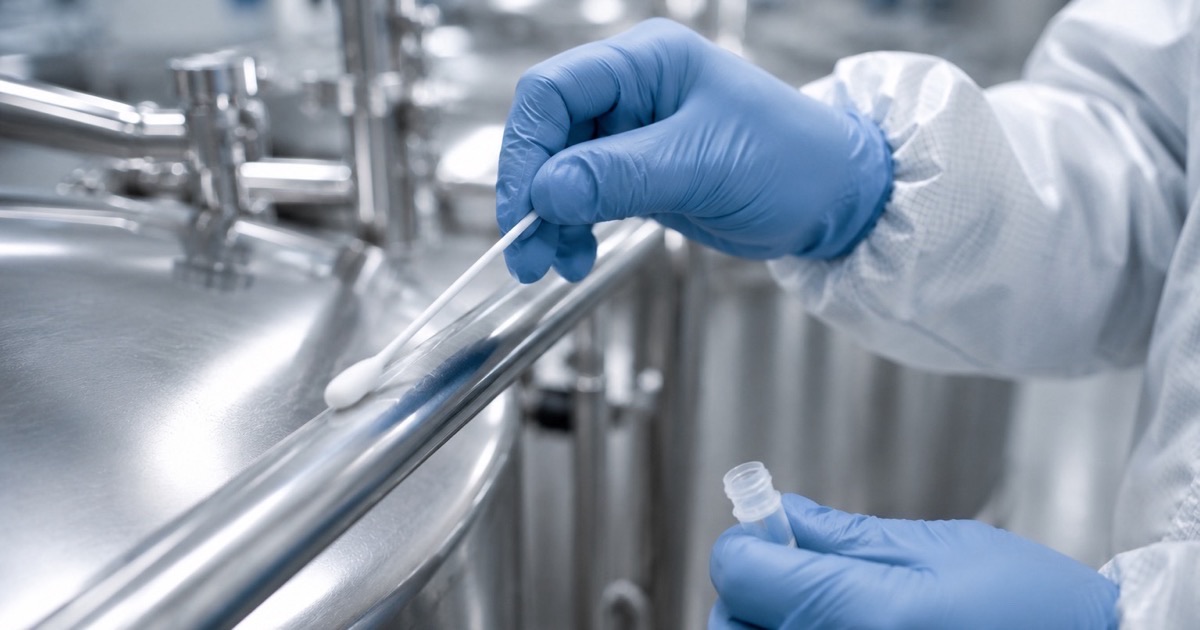
Swab Sampling Procedure for Cleaning Validation: Methods, Recovery and Limits
How to run swab and rinse sampling for cleaning validation — worst-case locations, the swab technique, recovery studies, the swab limit, and visual checks.
MACO Calculation: Methodology and Formulas for Cleaning Validation
How to calculate MACO three ways — health-based (PDE/ADE), dose-based, and 10 ppm — with formulas, a worked example, and an interactive calculator.
Cleaning Validation Protocol: A Step-by-Step Guide
How to design, execute and defend a cleaning validation protocol — worst-case selection, HBEL/MACO limits, sampling, hold times and audit-ready records.
Newsletter
Stay ahead in the Industry
Regulatory updates, pharma quality insights, and AI in manufacturing — written for quality leaders, not marketers.
Please use your official work email. Personal email addresses (Gmail, Yahoo, etc.) will not receive the newsletter. No spam. Unsubscribe anytime.
Ready to see what an AI-native quality platform looks like? Leucine unifies quality management, regulatory compliance, and production operations into one intelligent system.