


- 01 Batch review from 20 days to 1 day across 30+ facilities
- 02 Guided workflows that cannot be executed out of sequence
- 03 21 CFR Part 11 compliant electronic signatures at every step
- 04 60% reduction in manual data entries via instrument integration
What FDA Inspectors Cite
Batch record failures are among the most cited 483 findings. CDER warning letters jumped 50% in FY2025, with data integrity issues appearing in over a third of actions.
Production Head directed employees to fabricate batch records for activities that never occurred
Global Calcium Pvt. Limited
August 2, 2024
Employees were instructed to create batch records, cleaning records, and equipment logs for manufacturing activities that never took place. Excel spreadsheets guided the fabrication with pre-planned dates, times, and weights. When FDA discovered the plans, all files were deleted from the Plant Manager's computer that evening.
Why Paper Batch Records Fail Both QA and Manufacturing
Paper is a passive recording system imposed on an active manufacturing process. The same compliance failures and operational bottlenecks repeat at facilities worldwide.
Challenge 1/6
Paper Cannot Enforce Execution Sequence
- 01Steps can be signed off without detection until QA review — days later, after product has moved downstream
- 02Records completed after the fact look identical to contemporaneous entries
- 03No interlock prevents proceeding before the current step is verified complete
Batch Execution in Leucine MES
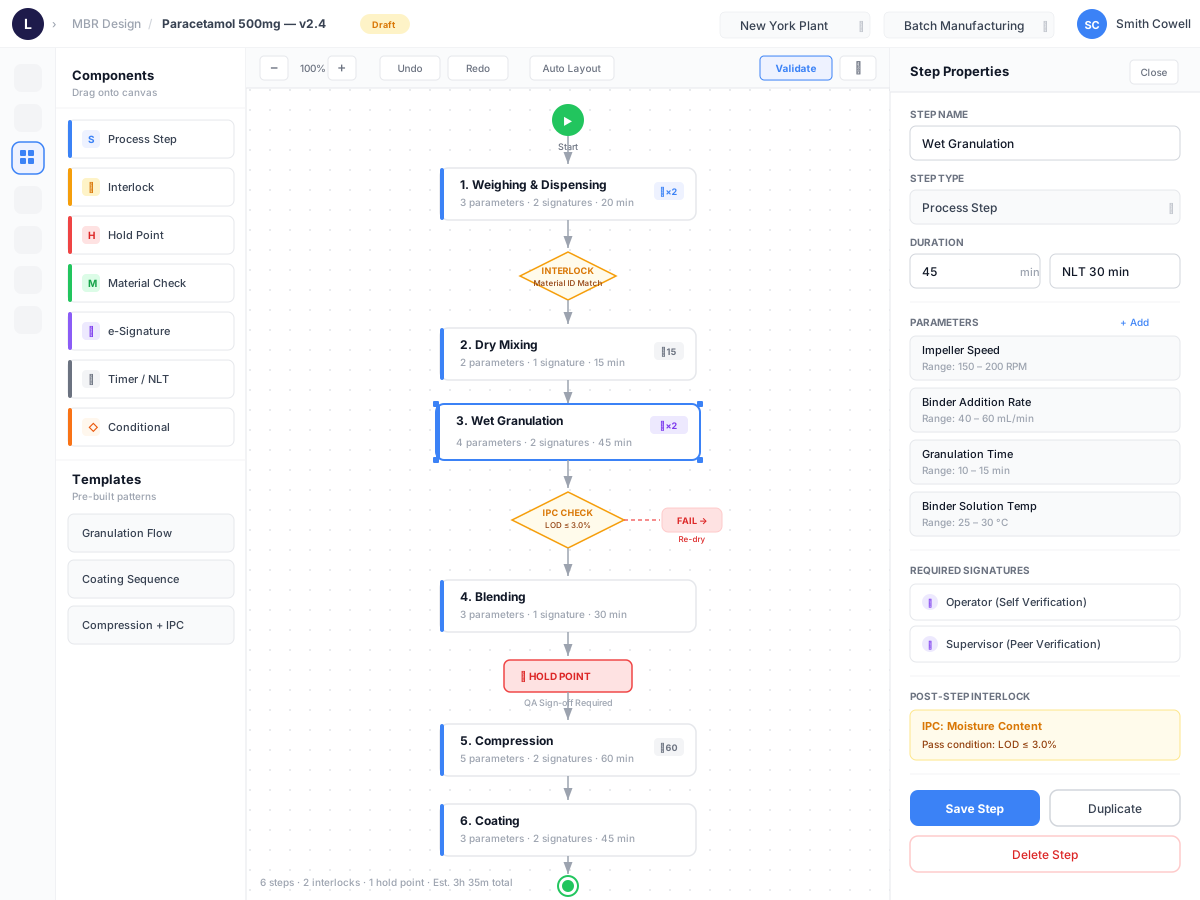
1.Guided Steps with Enforced Sequence
Each step loads with pre-configured parameters, materials, and verification points. Operators cannot skip, reorder, or backdate steps. Every interaction is automatically timestamped.
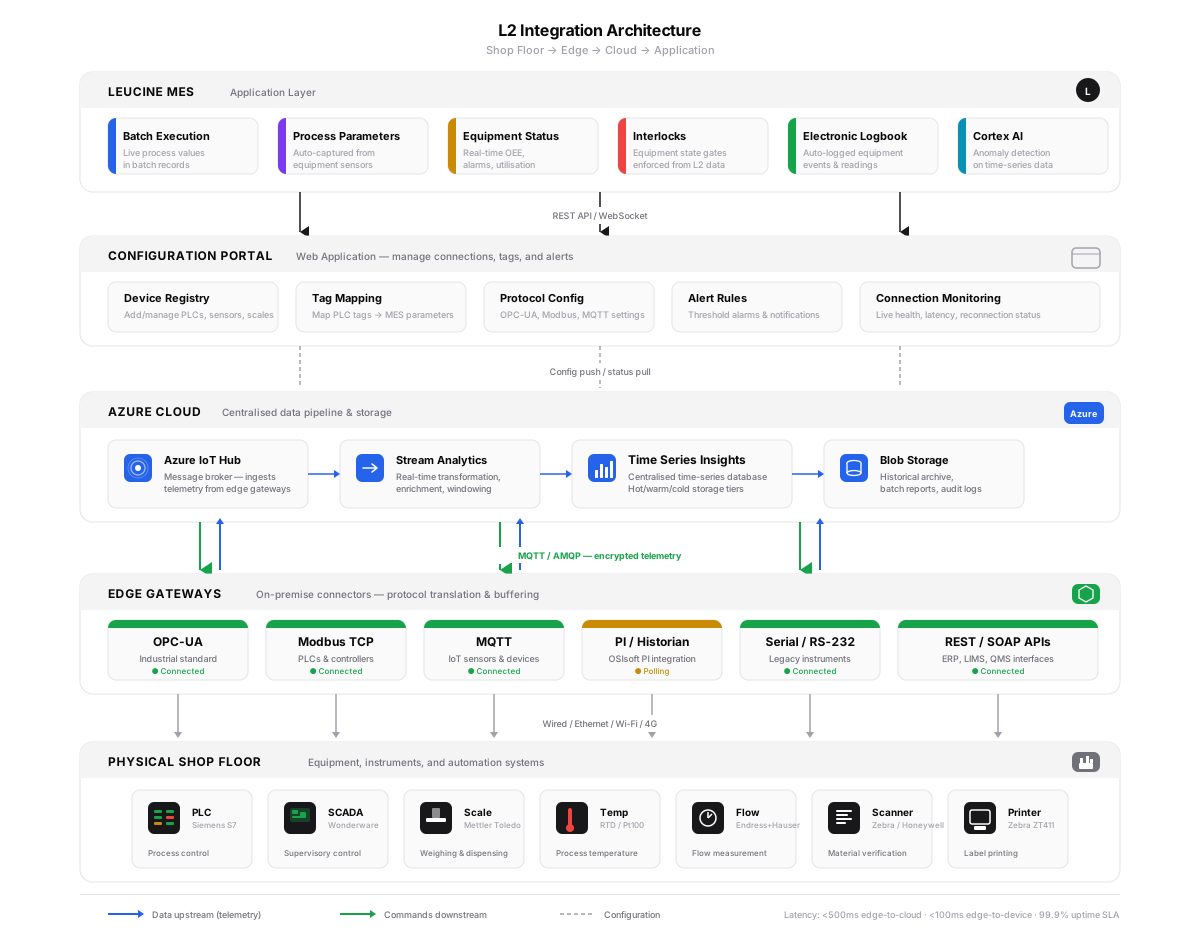
2.Direct Instrument Capture — Zero Transcription
Leucine MES connects to balances, sensors, and production equipment. Readings flow into the batch record at the point of measurement — nothing to copy by hand, no source data to discard.
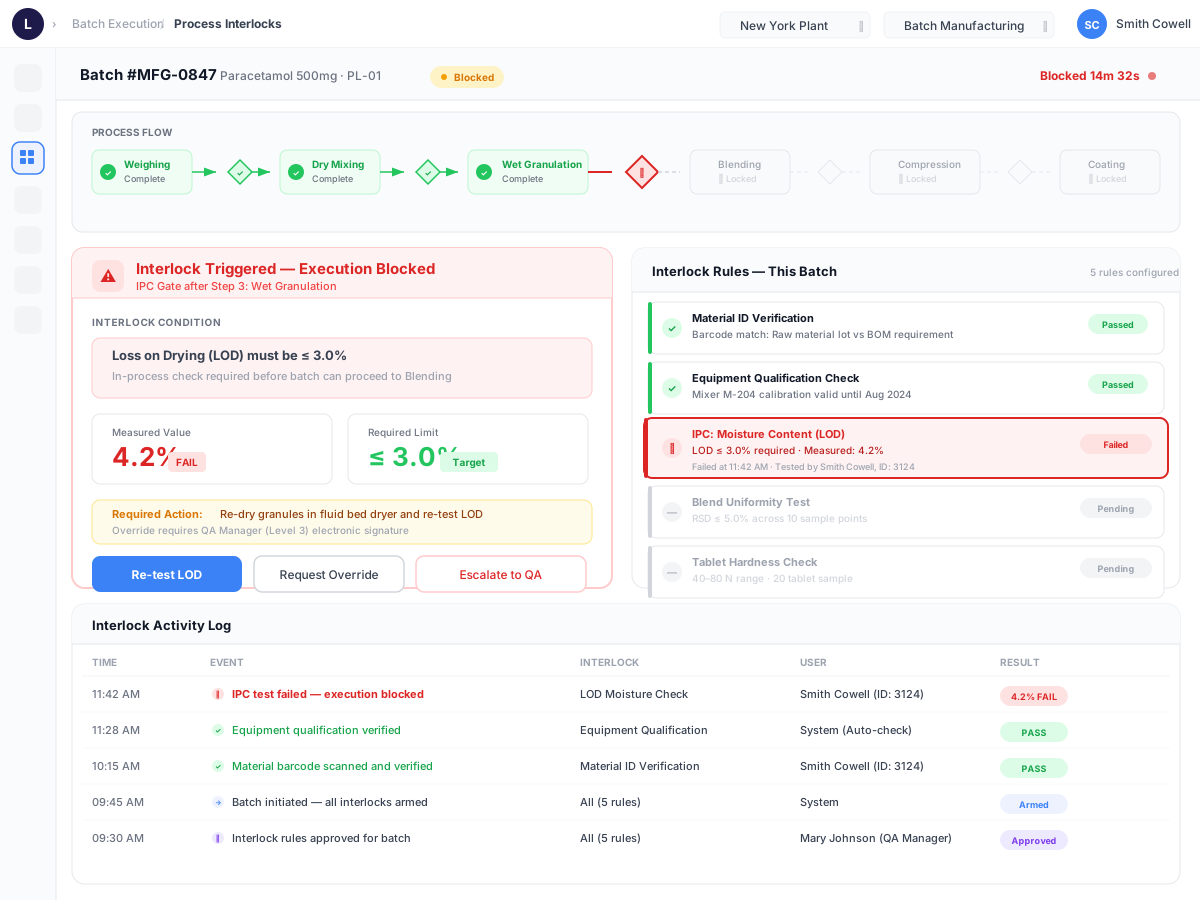
3.Real-Time Limit Checking
Every value is validated against specifications as it is captured. Out-of-range parameters are flagged during execution — not during review days later.
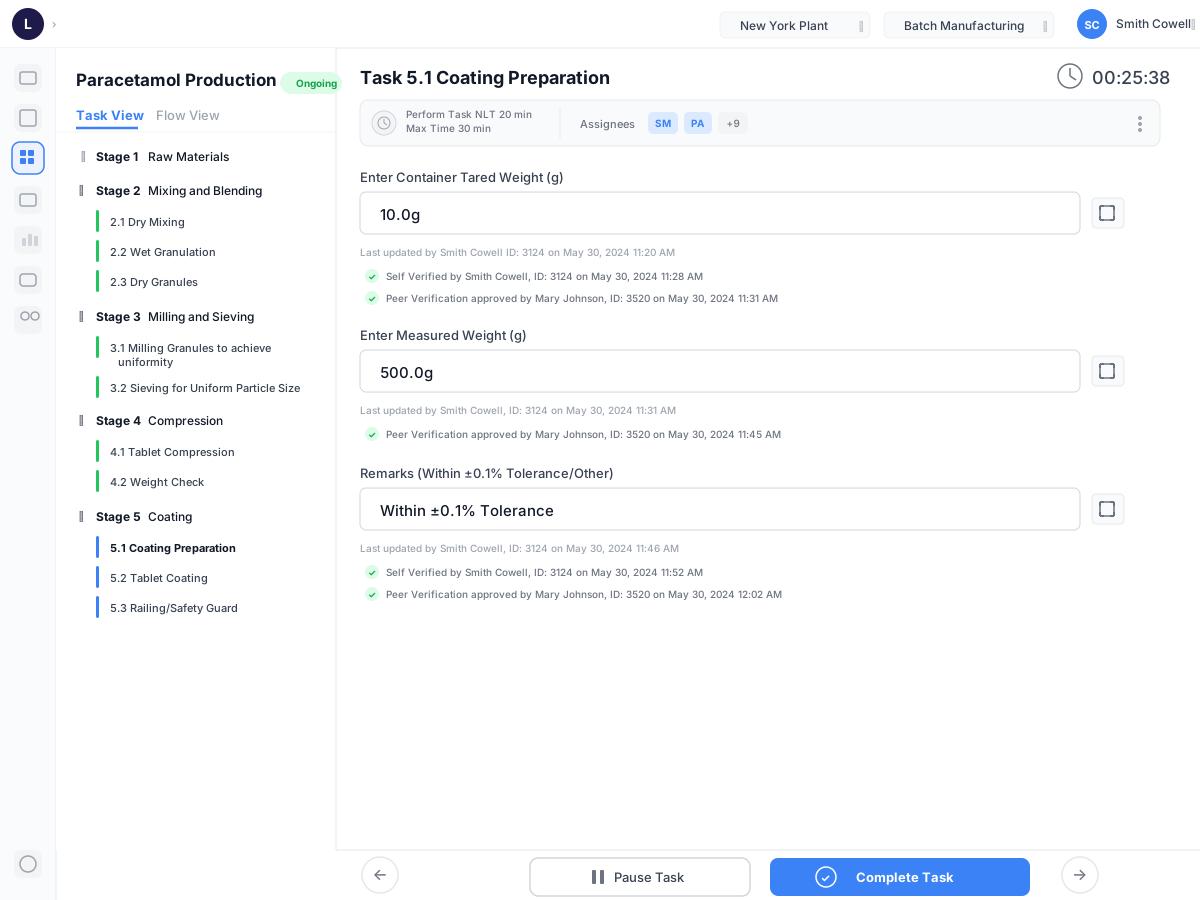
4.Individual Electronic Signatures
Every step is signed with individual credentials. Each signature creates a tamper-proof audit trail entry. Records cannot be altered without an auditable modification event.
5.Review-by-Exception — Batch Released Same Day
QA sees a focused exception report, not 200 pages. Compliant steps are acknowledged efficiently. Reviewers focus on what needs judgement. Batch release moves from weeks to hours.
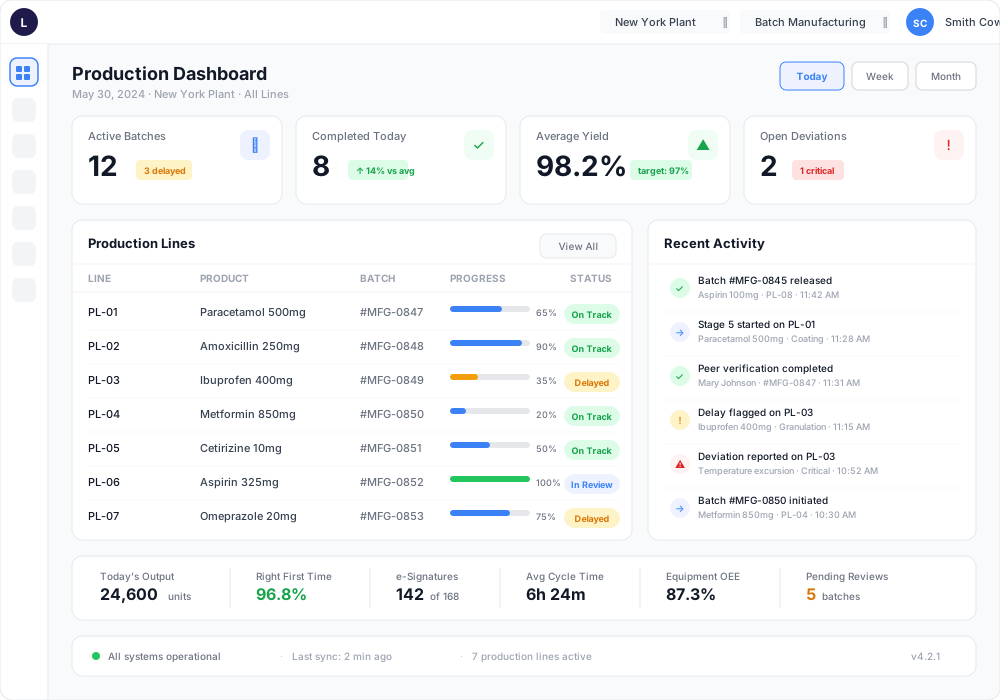
How Leucine Solves This
Addressing both the compliance gaps FDA finds and the operational bottlenecks that hold inventory, delay revenue, and consume QA bandwidth.
Guided Digital Workflows That Enforce What Paper Only Requests
Every step is sequenced, every parameter validated in real time, every action timestamped with individual credentials. Operators cannot proceed without completing steps correctly.
Capabilities
- Enforced step sequence — operators cannot skip, reorder, or backdate
- Direct instrument integration with zero transcription
- Real-time in-process limit checking with immediate alerts
- 21 CFR Part 11 electronic signatures and tamper-proof audit trails
Measurable Impact
Real results from manufacturers who replaced paper batch records with Leucine MES across 30+ facilities.
Batch Review Time
Reduction in batch review cycle — from 20 days to 1 day, 1,800+ batches processed digitally
Manual Data Entries
Fewer manual entries through direct instrument integration
Hours Recovered Annually
Documentation hours saved per facility per year
Facilities Live
Manufacturing facilities running Leucine MES across FDA, EMA, and MHRA jurisdictions
Frequently asked questions
Can operators keep working if the network drops mid-batch?
Yes. On-site edge gateways buffer equipment readings and step entries locally and reconcile to the cloud once connectivity returns, so a network drop never leaves a gap in the batch record. Every entry is written to an immutable, time-stamped audit trail.
How does review by exception stay 21 CFR Part 11 compliant if QA does not read every line?
Every step is still captured, signed, and audit-trailed in full. Review by exception changes what the reviewer reads, not what the record holds: the system verifies compliant steps against specification and surfaces only the exceptions for human judgement. The complete record, including every entry the reviewer never opens, stays inspection-ready.
How long does it take to move one product line from paper to electronic batch records?
Most sites take a master batch record live in 8 to 12 weeks, because implementation is configuration from templates rather than custom development. Teams usually prove one product line, confirm equivalence against the paper record, then expand. Cipla scaled this approach to 30 facilities.
Do we have to replace our existing equipment or instruments?
No. Leucine MES connects to balances, sensors, and production equipment through the L2 integration layer, including brownfield PLCs and SCADA, without modification. Readings flow into the batch record at the point of measurement, so there is nothing to copy by hand.
What happens to a batch record if we ever leave the platform?
Your records are yours. Every batch record exports as an audit-ready PDF, and structured data exports through open APIs and standard formats such as CSV and JSON. You keep full, inspection-ready copies for your retention requirements whether or not you stay on the platform.
Continue exploring
Powered by
Leucine MES
The Manufacturing Execution System for pharmaceutical manufacturing — from digitising batch records with full 21 CFR Part 11 compliance to connecting shop-floor data across a global facility network.
Explore Leucine MESStop losing weeks to paper batch review. Leucine MES enforces every step, captures every parameter at source, and compresses batch release from 20 days to 1.
