Key Highlights
Regulatory Context
What FDA Inspectors Cite
Production Head directed employees to fabricate batch records for activities that never occurred
Employees were instructed to create batch records, cleaning records, and equipment logs for manufacturing activities that never took place. Excel spreadsheets guided the fabrication with pre-planned dates, times, and weights. When FDA discovered the plans, all files were deleted from the Plant Manager's computer that evening.
Up to 167 interventions per batch unrecorded — cleaning records documented activities that never happened
CCTV revealed 7 to 167 aseptic filling interventions per batch going unrecorded, including types that would have triggered non-conformance investigations. Cleaning records documented mopping, disinfection, and sanitisation that CCTV confirmed never occurred. Production personnel acknowledged fabricating the times.
Source data discarded after transcription — no way to verify accuracy
Labels recording visual inspection results during media fills were discarded after transcription into the batch record. The SOP required neither retention of source labels nor second-person verification of the transfer.
Shared login credentials across production systems — no audit trail
Multiple production systems used shared usernames and passwords with no audit trail. Failing tests and process alarms were visible on screen only — not saved electronically. A system rebuild after a power outage was not followed by revalidation.
Production revised batch records without Quality Unit knowledge
The batch record was revised repeatedly by Production to fix missing times and signatures — without QA knowledge or approval. Correction forms were found in the Supervisor's office and discard bins. The Quality Unit lacked visibility to detect these changes.
Interventions during aseptic filling not recorded — line speed and stoppages undocumented
FDA inspectors directly observed multiple interventions during aseptic filling — tube replacements, manual machine adjustments — none documented in batch records. Filling line speed and stoppage times were also not recorded.
The Problem
Why Paper Batch Records Fail Both QA and Manufacturing
Paper Cannot Enforce Execution Sequence
- Steps can be signed off without detection until QA review — days later, after product has moved downstream
- Records completed after the fact look identical to contemporaneous entries
- No interlock prevents proceeding before the current step is verified complete
Every Manual Entry Is a Transcription Risk
- A typical batch record requires 200-400 manual data entries per batch
- Source data — balance printouts, instrument displays — is often discarded after transcription
- Paper-based facilities achieve only 60-70% right-first-time rates
Paper Has No Audit Trail
- FDA cannot distinguish contemporaneous entries from records completed after the fact
- Even legitimate corrections create data integrity questions at every audit
- Fabricated entries look identical to originals — CCTV at Eugia contradicted their batch records
Batch Review Requires Reading Every Page
- Reviewers spend equal time on routine entries and genuine exceptions
- Review queues create 10-20 day backlogs, holding inventory and delaying revenue
- Missing a single signature forces expensive investigation and batch holds
Batch Data Cannot Be Analysed
- Process capability trending requires weeks of manual extraction from binders
- Patterns across batches — yield losses, parameter drift — are invisible at scale
- APQRs become sampling exercises when data lives on paper
Multi-Site Formats Block Comparison
- The same product at two sites produces records with different fields and terminology
- Multi-jurisdiction operations compound the inconsistency across FDA, EMA, MHRA
- Enterprise-wide quality dashboards are impossible without standardised digital data
Batch Execution in Leucine MES
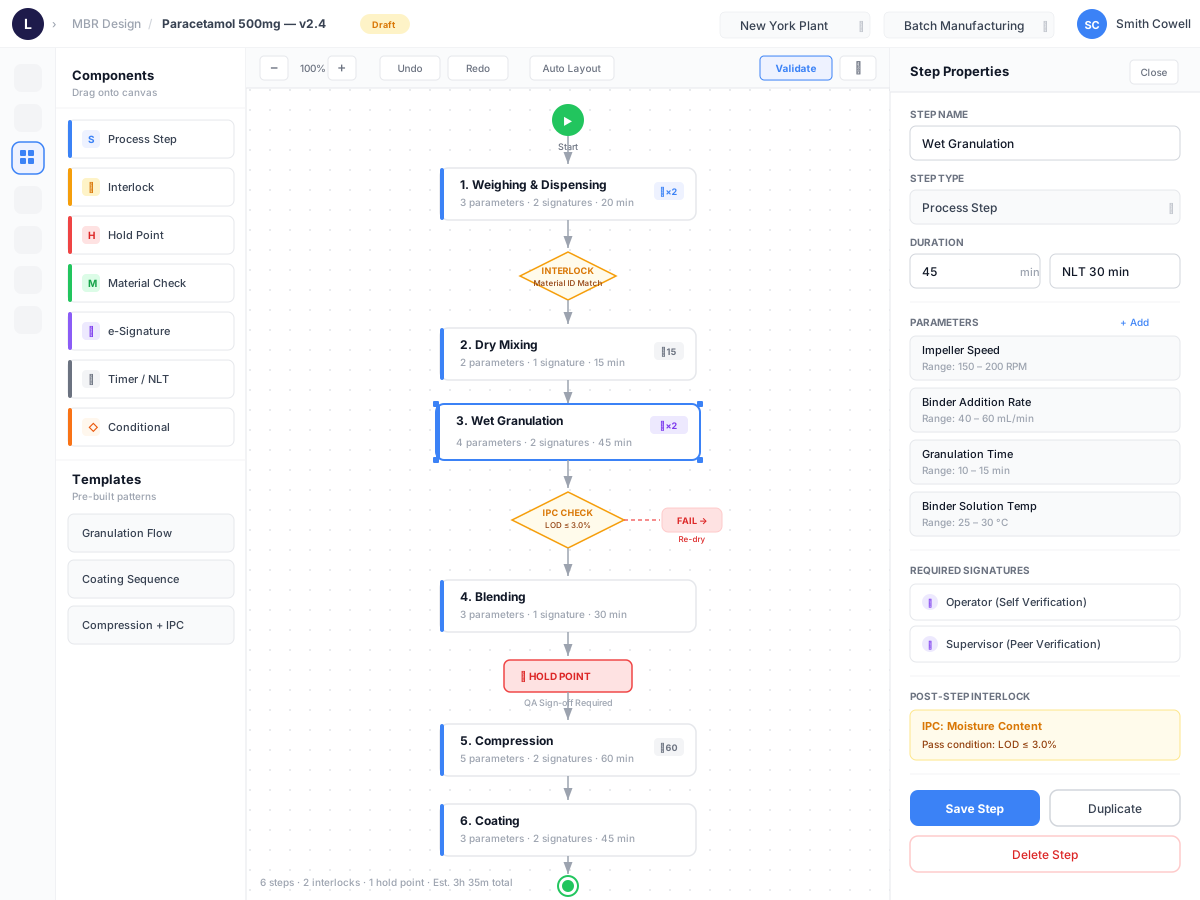
Guided Steps with Enforced Sequence
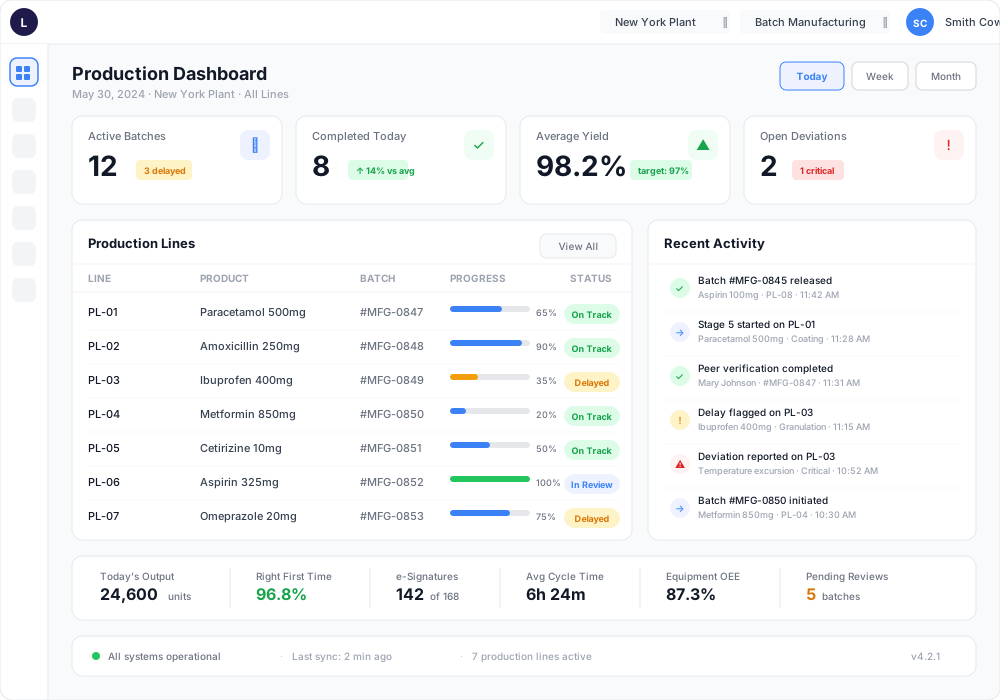
Each step loads with pre-configured parameters, materials, and verification points. Operators cannot skip, reorder, or backdate steps. Every interaction is automatically timestamped.
Direct Instrument Capture — Zero Transcription
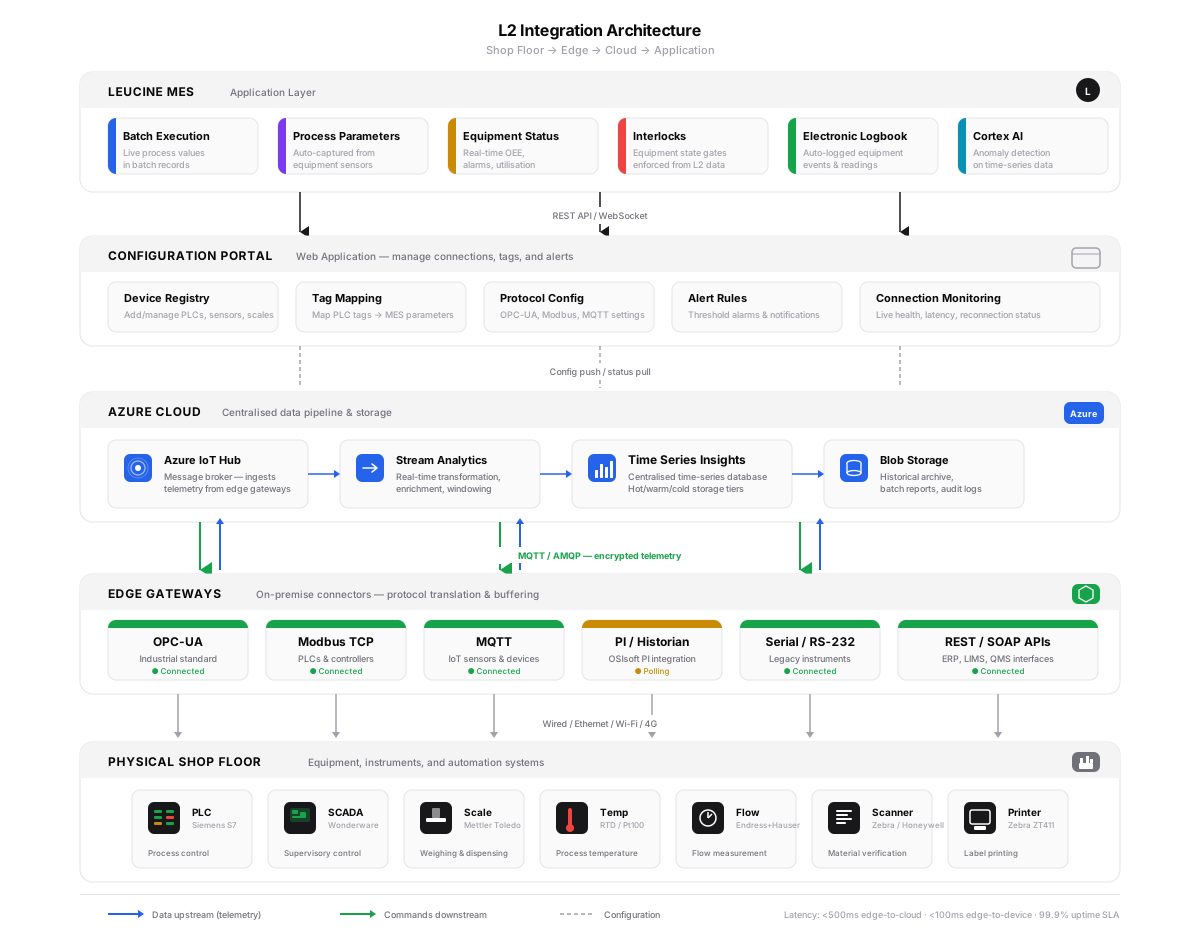
Leucine MES connects to balances, sensors, and production equipment. Readings flow into the batch record at the point of measurement — nothing to copy by hand, no source data to discard.
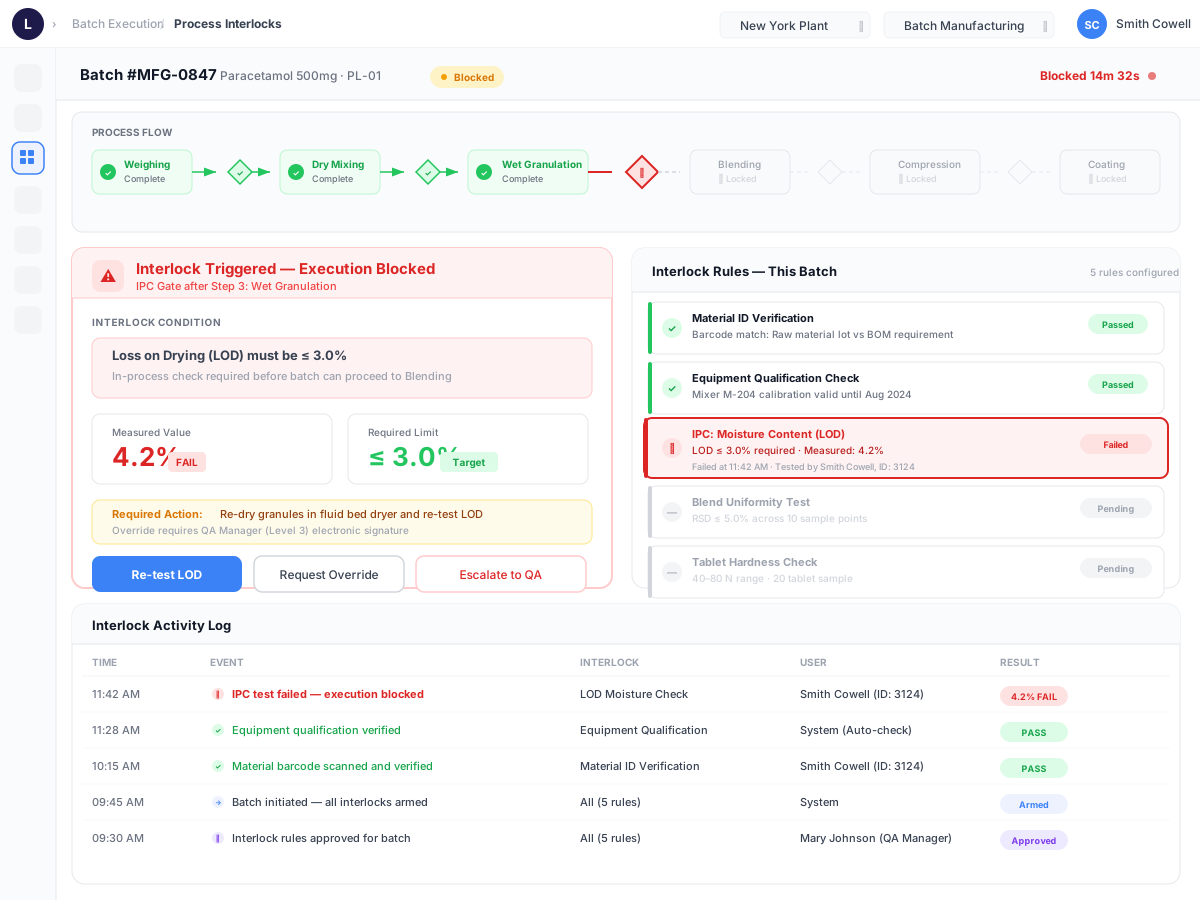
Real-Time Limit Checking
Every value is validated against specifications as it is captured. Out-of-range parameters are flagged during execution — not during review days later.
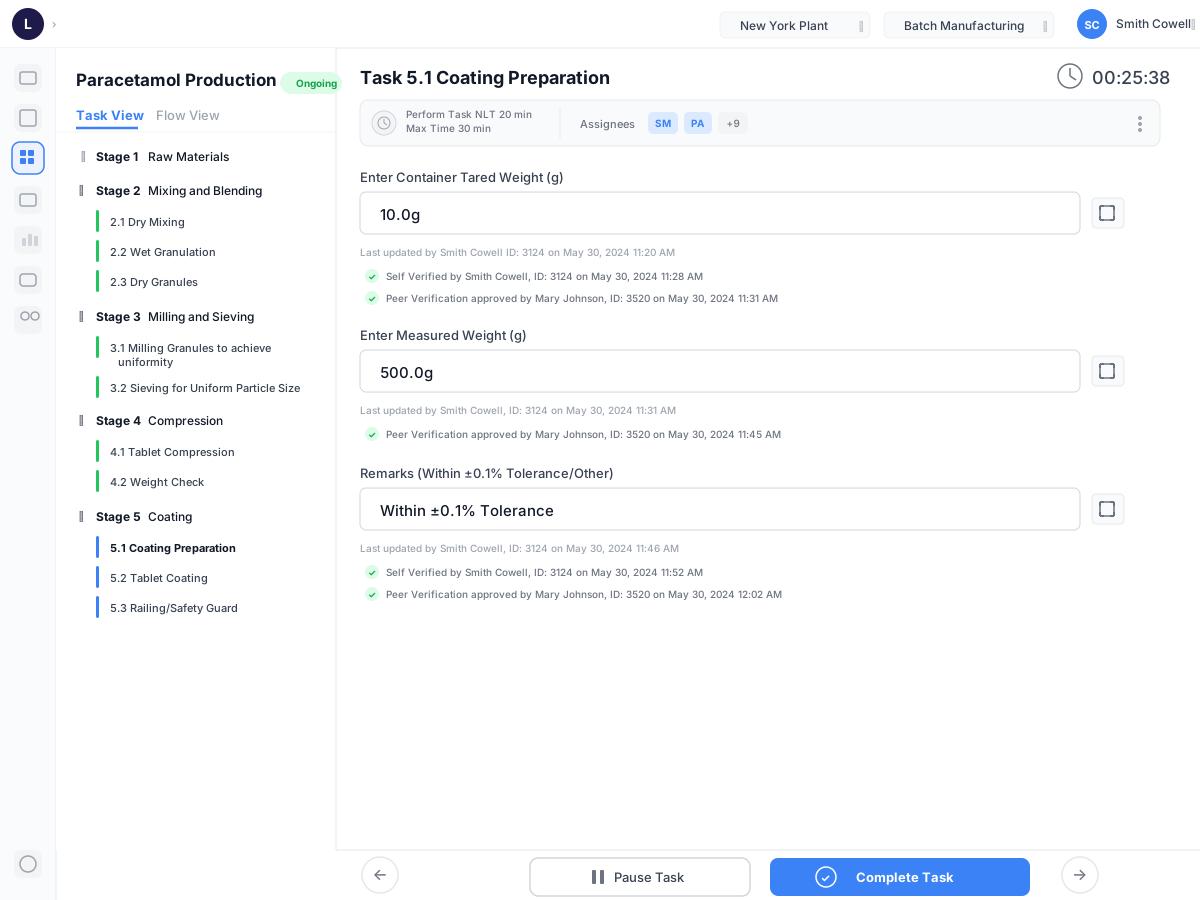
Individual Electronic Signatures
Every step is signed with individual credentials. Each signature creates a tamper-proof audit trail entry. Records cannot be altered without an auditable modification event.
Review-by-Exception — Batch Released Same Day
QA sees a focused exception report, not 200 pages. Compliant steps are acknowledged efficiently. Reviewers focus on what needs judgement. Batch release moves from weeks to hours.
The Solution
How Leucine Solves This
Addressing both the compliance gaps FDA finds and the operational bottlenecks that hold inventory, delay revenue, and consume QA bandwidth.
Guided Digital Workflows That Enforce What Paper Only Requests
Every step is sequenced, every parameter validated in real time, every action timestamped with individual credentials. Operators cannot proceed without completing steps correctly.
- Enforced step sequence — operators cannot skip, reorder, or backdate
- Direct instrument integration with zero transcription
- Real-time in-process limit checking with immediate alerts
Batch Release in Hours, Not Weeks
QA reviewers engage only with exceptions. Compliant steps are acknowledged efficiently. The Quality Unit maintains full oversight — with an audit trail that proves it.
- Exception-based review surfacing only flagged deviations for QA
- Automated completeness check — no missing signatures or unsigned steps
- Standardised formats across all facilities for cross-site review
From MES Data to Enterprise-Wide Quality Analytics
Once Leucine MES captures structured batch data across your network, LeucineOS analyses it at scale — surfacing yield loss patterns, Cpk trends, and cross-site comparisons.
- Cross-batch pattern analysis for yield loss root causes
- Continuous process capability trending across products and lines
- Deviation clustering to detect systemic failures before they become 483s
Track FDA Enforcement on Batch Records in Real Time
CDER warning letters jumped 50% in FY2025. FDA Tracker monitors 483 observations and warning letters so your team benchmarks against current enforcement before an inspection arrives.
- Real-time 483 tracking for batch records, data integrity, and system controls
- Warning letter analysis for QCU oversight and record fabrication trends
- Facility-level enforcement history for competitor benchmarking
Results
Measurable Impact
Real results from manufacturers who replaced paper batch records with Leucine MES across 30+ facilities.