

Instapill + Leucine
Building a 100% paperless pharmaceutical manufacturing operation from the ground up — with Leucine MES embedded from day one across every production block.
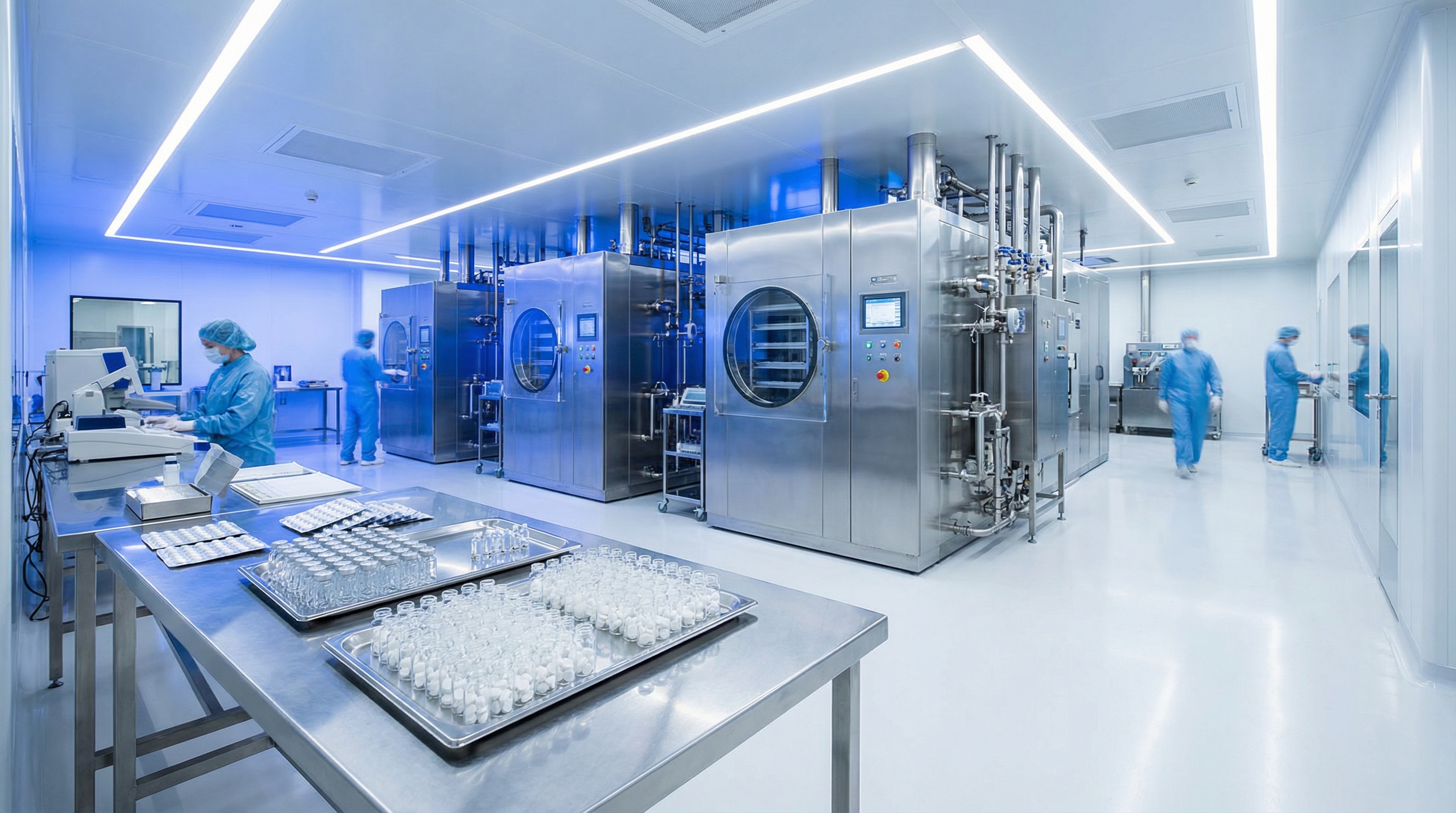
“We were very clear from day one that we have to bring something which is industry first. On data integrity and process quality, Leucine was way ahead amongst the options we evaluated — and we are very happy with that decision.”
Ankit Gupta
CEO, Instapill
01 /
Challenge
Instapill is a pharmaceutical technology company that manufactures proprietary lyophilized (freeze-dried) tablets — a specialised dosage form designed for pediatric and geriatric patients, as well as applications requiring improved patient compliance and on-the-go convenience. The company operates in some of the world's most demanding regulatory environments, exporting to the United States, Europe, Australia, Latin America, and the Middle East.
From its founding, Instapill's leadership was clear on one principle: the company would be technology-first in everything it did. In an industry where many manufacturers still rely on paper batch records, manual data capture, and legacy systems cobbled together over decades, Instapill set out to build a manufacturing operation where digital infrastructure was not an afterthought but a foundational design choice.
The challenge was not retrofitting an existing paper-based operation — it was making the right technology decisions before production began. Choosing the wrong manufacturing execution system would mean inheriting the same data integrity gaps, manual workarounds, and audit vulnerabilities that plague traditional pharmaceutical manufacturers. For a company building proprietary processes around a novel dosage form, the quality of manufacturing data was not just an operational concern — it was a competitive differentiator in highly regulated markets.
Instapill evaluated multiple MES options, including legacy systems with established market presence. The evaluation criteria were clear: the system had to deliver a high degree of data integrity across both manufacturing processes and quality data, it had to integrate directly with production machinery and existing data systems rather than operating as a siloed tool, and the data output had to be structured in a way that enabled real business insights — not just compliance checkbox-ticking.
As the company planned its expansion — commissioning a second production block and designing a third with 200 million units of additional capacity — the MES decision would determine whether each new block could launch paperless from day one, or whether the company would accumulate the same technical and compliance debt that its competitors were still struggling to resolve.
- ↪ How do you build a pharmaceutical manufacturing operation that is 100% paperless from the first day of production?
- ↪ How do you select an MES that integrates with machinery and data systems rather than operating as a standalone tool?
- ↪ How do you ensure every new production block launches with full data integrity and audit readiness built in?
- ↪ How do you generate manufacturing data that drives business decisions, not just regulatory compliance?

02 /
Solution
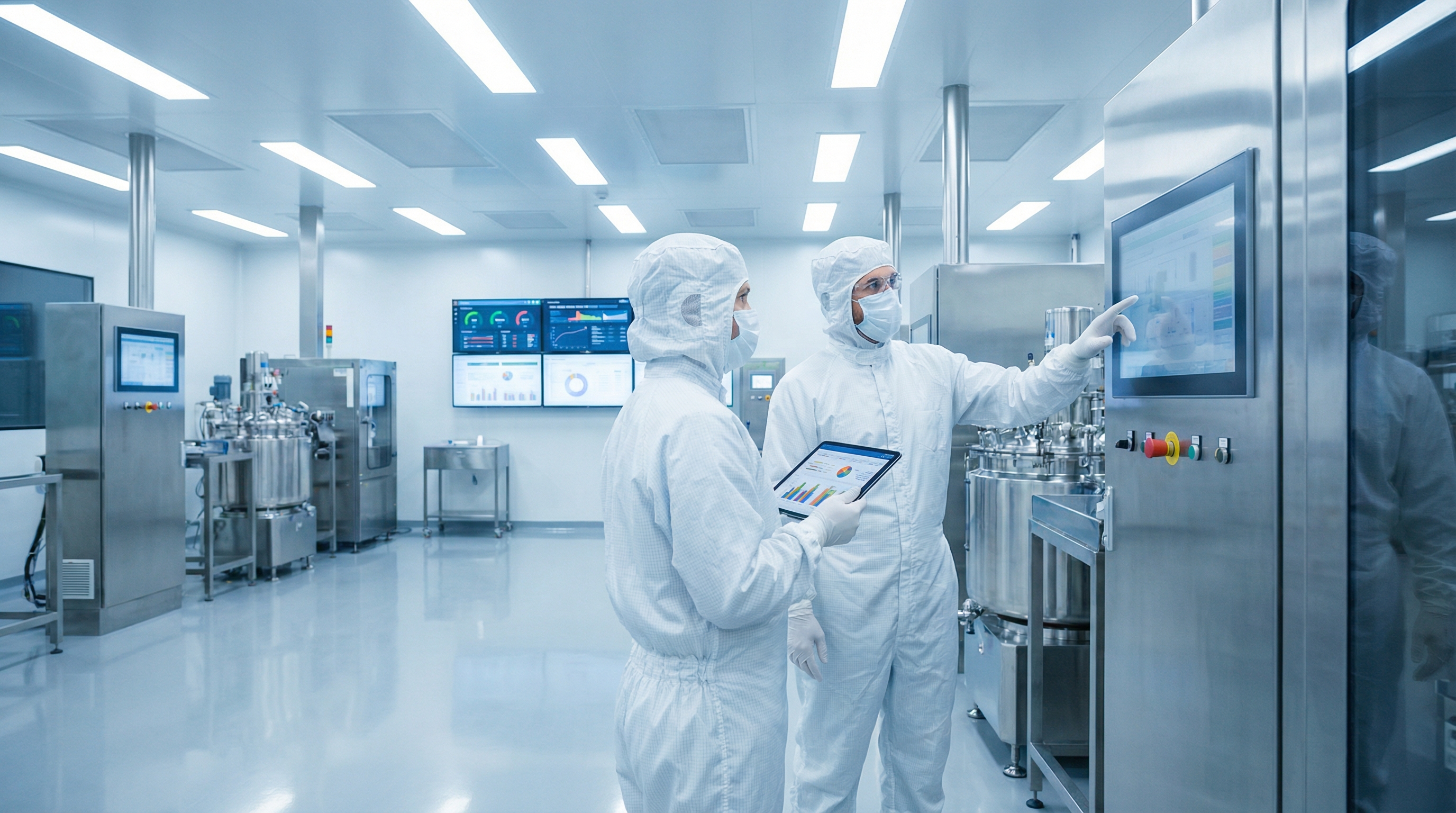
Instapill selected Leucine MES after evaluating it against legacy MES options — choosing it for two reasons that CEO Ankit Gupta describes as decisive: the quality of data that the system produces, and the depth of its integration with both production machinery and the company's broader data ecosystem. Unlike standalone systems that capture data in isolation, Leucine MES was deployed as the connective layer between Instapill's equipment, quality systems, and business intelligence workflows.
The first production block established the foundation — replacing what would traditionally be paper batch records with structured digital workflows, electronic signatures, and tamper-proof audit trails. But the real proof came with the second production block, which was commissioned as a 100% paperless operation from its first day of production. No parallel paper systems, no phased transition — the block launched entirely on Leucine MES, with every batch record, every equipment log, and every quality check captured digitally from the start.
The integration architecture was designed to deliver what Gupta describes as "bespoke" data output — manufacturing data structured specifically to support Instapill's operational and business decision-making. Production efficiency metrics, material consumption analytics, product-to-product performance comparisons, and CDMO partner reporting all flow from the same data captured on the production floor. For a company serving contract manufacturing partners, this level of data transparency is not a luxury — it is a business requirement.
On the quality side, the impact on audit readiness was immediate. With every data point captured digitally, timestamped, and protected by a complete audit trail, regulatory inspections shifted from document retrieval exercises to data-driven conversations. Gupta notes that auditors respond positively to the data quality — the integrity is built into the capture process, not layered on after the fact through manual review and correction.
With the second block fully operational on Leucine MES, Instapill is now commissioning a third production block that will add 200 million units of manufacturing capacity. This block is being designed to be "day one Leucine compliant" — meaning the MES configuration, machinery integration, and digital workflows will be ready before the first batch runs. The pattern Instapill has established — each new block launching paperless from commissioning — is now the company's standard approach to capacity expansion.
Gupta frames the broader strategic value plainly: the structured manufacturing data that Leucine MES captures across every production block already powers Instapill's operational decisions — from production efficiency analysis and material consumption tracking to CDMO partner reporting. Auditors have cited the quality of Instapill's data integrity as a standout, and every new block launched on the platform reinforces a compounding advantage. For a company competing in highly regulated global markets on the basis of technology differentiation, that demonstrated data foundation is a structural asset its competitors are still working to build.
03 /
Impact
100%
Paperless manufacturing from second production block onward — no paper batch records
200M
Units of new capacity launching on Leucine MES from day one
6+
Highly regulated export markets including the US, Europe, Australia, and Brazil
3
Production blocks deploying Leucine MES — each launched paperless from day one
Hear from Instapill
In Their Words
“We chose Leucine MES for two reasons: the quality of data it produces and the depth of its integration with our production machinery and data ecosystem.”
Ankit Gupta
CEO, Instapill
Powered by
Leucine MES
The Manufacturing Execution System that Instapill chose to build its entire manufacturing operation around — delivering 100% paperless production, deep machinery integration, and audit-ready data integrity from day one across every production block.
Explore Leucine MES04 /
Schedule a demo
Want to explore how Leucine can help your manufacturing operations achieve similar results? Our team will walk you through the platform and help you find the right solution for your facilities.