

Insights & Resources
Stay ahead with the latest thinking on pharmaceutical manufacturing, AI in quality management, and digital transformation strategies.
Featured Articles
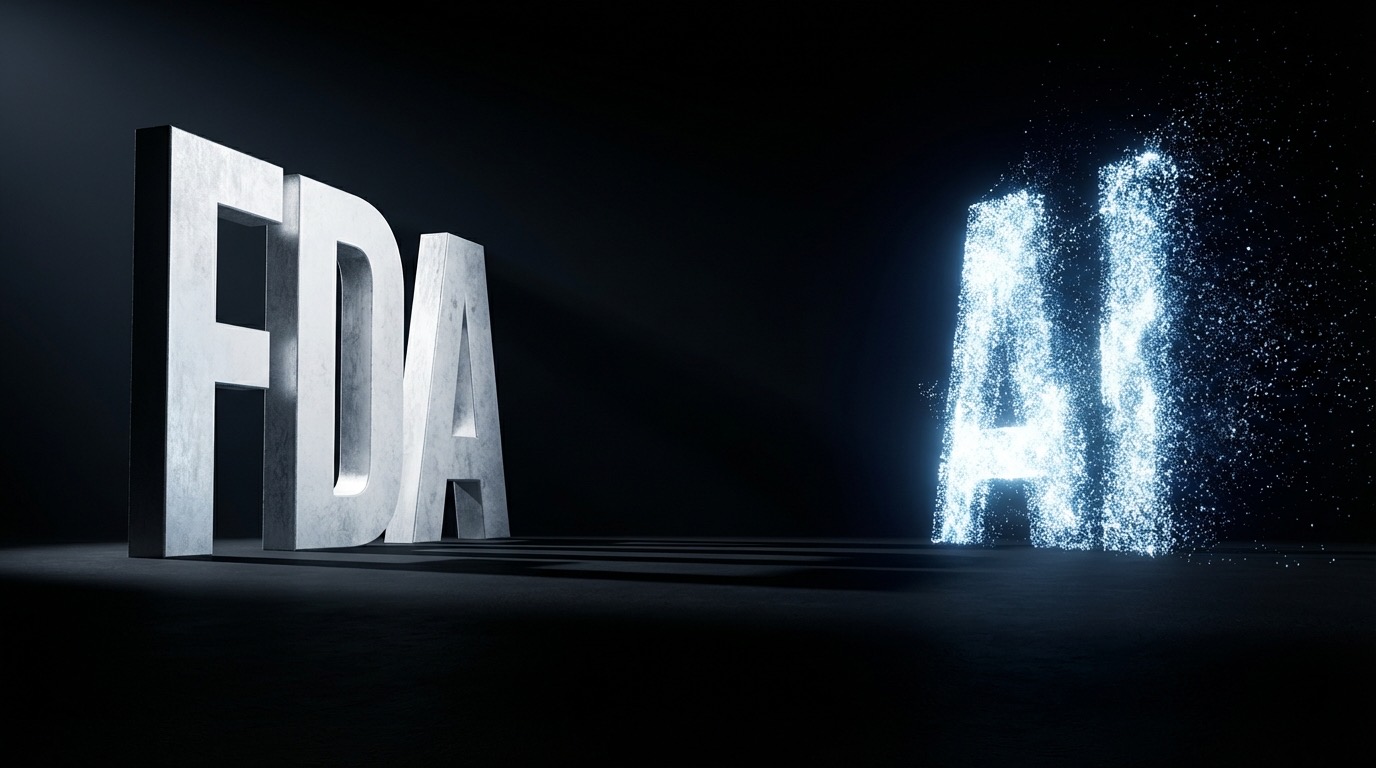
FDA's First AI Warning Letter Is Not About AI
FDA issued its first AI-specific warning letter to a manufacturer that used AI to generate SOPs and production records without qualified human review. The industry's response will be 'add a sign-off.' That response misses what the letter actually established.

The Document Was Approved. Nobody Told the Floor.
The gap between a document reaching effectivity and operators being formally qualified to it is a direct product of DMS architecture — not operator negligence. The DMS handed off. The LMS was waiting. No system was watching the window in between.

The Periodic Review That Isn't: Why Calendar-Based SOP Cycles Create Compliance Records Without Creating Compliant Documents
Most pharmaceutical DMS platforms schedule SOP reviews by elapsed time, not by risk. The result is a completion record confirming the review happened — and no mechanism to confirm the procedure is still current.

The Harmonisation Myth: Why Multi-Site DMS Deployments Mean One Contract and Fourteen Isolated Quality Systems
Your DMS contract covers every facility you operate. Your DMS architecture does not — and FDA's cross-facility enforcement does not observe that distinction.
Newsletter
Stay ahead in the Industry
Regulatory updates, pharma quality insights, and AI in manufacturing — written for quality leaders, not marketers.
Please use your official work email. Personal email addresses (Gmail, Yahoo, etc.) will not receive the newsletter. No spam. Unsubscribe anytime.
Blog
View all
Data Integrity in Pharma: ALCOA+, Regulators, and the 483 Failures
Data integrity in pharma: the nine ALCOA+ principles with examples, FDA/MHRA/WHO expectations, the recurring 483 failures, and revised Schedule M.

21 CFR Part 11: What It Is and What It Requires
What 21 CFR Part 11 requires in plain English: electronic records and signatures, predicate rules, audit trails, validation, and Annex 11 mapping.
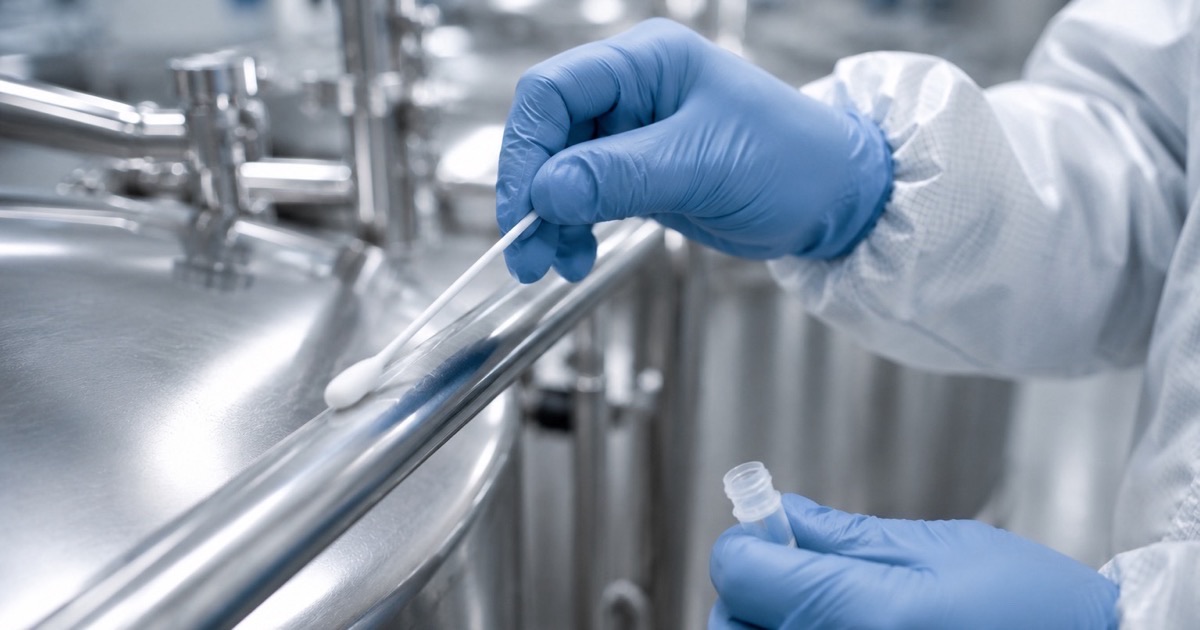
Swab Sampling Procedure for Cleaning Validation: Methods, Recovery and Limits
How to run swab and rinse sampling for cleaning validation — worst-case locations, the swab technique, recovery studies, the swab limit, and visual checks.

MACO Calculation: Methodology and Formulas for Cleaning Validation
How to calculate MACO three ways — health-based (PDE/ADE), dose-based, and 10 ppm — with formulas, a worked example, and an interactive calculator.
Whitepapers
View all
The Quality Ontology: Why Pharma AI Needs a Knowledge Graph, Not a Data Warehouse
A technical deep-dive into the quality ontology — the connected knowledge model that enables AI agents to reason across MES, LIMS, QMS, and ERP simultaneously. How the Ontology Builder Agent constructs it, how the signal layer keeps it alive, and why this architecture is the prerequisite for every agentic use case in pharmaceutical manufacturing.

Predictive Product Quality: Why Agentic Architecture Outperforms ML Models and Dashboards
Product quality prediction requires a network of specialised AI agents — not a single ML model. How agents, skills, sub-agents, and standardised tool interfaces deliver continuous risk intelligence that annual CPV reviews structurally cannot.

Agentic AI vs. AI Copilots in Pharma: Why Architecture Determines Impact
Most pharma AI deployments are copilots — reactive, single-step, human-prompted. Agentic AI is architecturally different: goal-directed, multi-step, and autonomous within guardrails. A technical framework for CIOs.
Agentic Yield Intelligence: How Goal-Based AI Agents Eliminate Manufacturing Losses
Why dashboards and copilots can't solve pharma yield — and how goal-based AI agents with specialized skills autonomously prevent batch losses before they occur.
Case Studies
View all
Three Facilities, Three FDA Actions, Five Architectural Gaps: How AI Agents Address Cipla's Regulatory Exposure
Between 2023 and 2026, three Cipla facilities — Pithampur, Raigad, and Pharmathen Greece — received FDA enforcement actions documenting the same five systemic failures: complaint investigation, CAPA effectiveness, electronic data review, contamination control, and QC oversight. LeucineOS AI agents map directly to each gap.

35% OOS Invalidations, Zero Scientific Justification: Lessons from Aurobindo Pharma's FDA 483
A February 2026 FDA 483 at Aurobindo Pharma's Unit-III found 35% of OOS invalidations in the QC Chemistry lab — with 57% blamed on analyst error and 18% on equipment, none supported by adequate scientific justification. Batches shipped to the US after unresolved Grade A maintenance interventions.
Equipment Swapped, Cleaning Not Revalidated, OOS Dissolved Away: Lessons from Dr. Reddy's FDA 483
A December 2025 FDA 483 at Dr. Reddy's FTO-SEZ facility in Srikakulam found cleaning validation not performed after equipment replacement, OOS dissolution results invalidated despite contradictory evidence, and process qualification gaps — all traceable to a single uncontrolled equipment change eighteen months earlier.
Flaking Caulk, Unmonitored Drains, 'Clean' Equipment with Residue: Lessons from Shilpa Medicare's FDA 483
A November 2025 FDA 483 at Shilpa Medicare found aseptic equipment with non-cleanable surfaces, drains never monitored for microbial growth, caulk-like material flaking inside filling machines, and equipment tagged as 'clean' with residue above acceptance limits.